
Choosing a paint color is often the most exciting part of a renovation, but choosing the right finish—the level of sheen or gloss—is what determines how well your walls will actually hold up to daily life.
Paint finishes are essentially a trade-off between durability and imperfection-hiding. Higher-gloss paints are tough and easy to clean but reflect light, highlighting every bump in the drywall. Lower-sheen (matte) paints are velvety and forgiving on uneven surfaces but are generally harder to scrub. This guide will help you balance these factors so your paint job looks great and stays that way.
Understanding Paint Sheen Levels
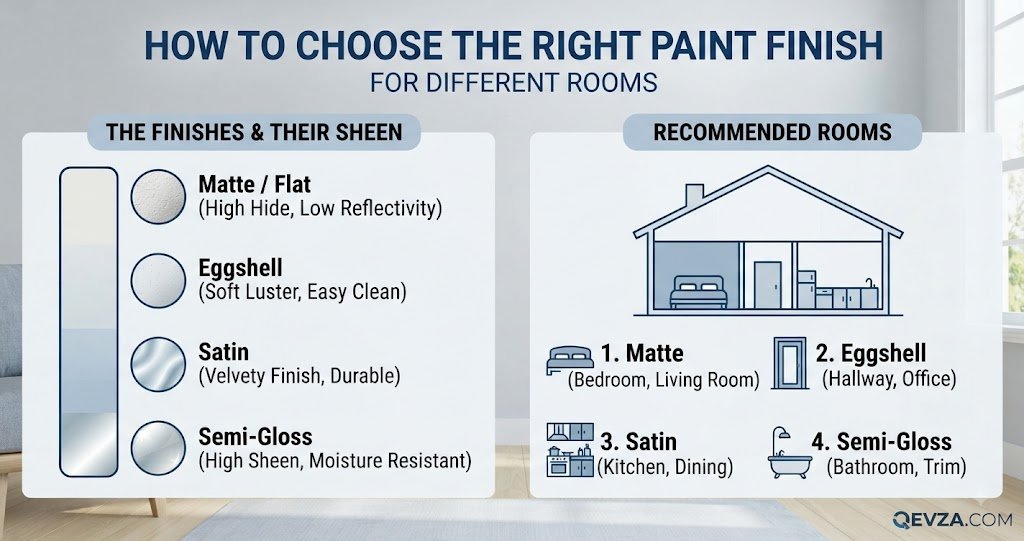
Before selecting a product, it helps to know how they rank on the “gloss scale.” From dullest to shiniest, the standard hierarchy is:
-
Flat/Matte: No reflection. Excellent at hiding wall imperfections. Difficult to clean.
-
Eggshell: A very soft, low-luster sheen resembling a chicken egg. The standard for most living spaces.
-
Satin: A pearl-like finish. More durable and moisture-resistant than eggshell.
-
Semi-Gloss: Noticeably shiny and very smooth. Highly resistant to moisture and scrubbing.
-
High-Gloss: A glass-like, mirror finish. Extremely durable but unforgiving on surface flaws.
Room-by-Room Recommendations
Where you put the paint is the most important factor in your decision. Use this breakdown to match the finish to the room’s function.
Living Rooms, Bedrooms, and Dining Rooms
These areas are generally “low-traffic” regarding physical contact with walls. You want a finish that absorbs light to create a cozy atmosphere and hides minor drywall texture issues.
-
Best Choice: Flat, Matte, or Eggshell.
-
Why: These finishes provide a sophisticated, non-reflective look. Eggshell is a popular middle ground because it offers a slight bit of washability if you accidentally brush against it with a dusty hand.
Kitchens and Bathrooms
These rooms are “high-stress” environments. They face constant exposure to steam, humidity, cooking grease, and frequent cleaning.
-
Best Choice: Satin or Semi-Gloss.
-
Why: Moisture will penetrate porous flat paint, leading to mildew or peeling. Satin and semi-gloss paints contain more resin, creating a sealed, water-repellent barrier that allows you to wipe away grease and soap scum without damaging the finish.
Hallways, Entryways, and Kids’ Rooms
High-traffic zones are prone to scuffs, backpacks dragging against the wall, and sticky fingerprints. Durability is the priority here.
-
Best Choice: Satin.
-
Why: Satin is the “Goldilocks” finish for busy homes. It is tough enough to handle a damp sponge for spot-cleaning but doesn’t have the intense, plastic-like shine of semi-gloss that would make a hallway look like a hospital corridor.
Trim, Doors, and Cabinetry
Architectural details are meant to pop. You want a finish that provides a hard, durable surface that is distinct from the wall color.
-
Best Choice: Semi-Gloss or High-Gloss.
-
Why: Baseboards, window casings, and doors take the most physical abuse. A high-sheen finish creates a protective shell that resists nicks and makes dust easily removable with a cloth.
The “Imperfection” Rule
Before committing to a finish, inspect your walls closely. Shine a flashlight at a low angle across the surface.
-
If you see ridges, patches, or uneven drywall: Stick to Flat or Matte. The lack of reflection masks these flaws.
-
If you have perfectly smooth, professional-grade drywall: You have the luxury of choosing Satin or Semi-Gloss anywhere in the house.
[Internal link opportunity: article about how to repair minor drywall cracks and dings]
Common Mistakes to Avoid
-
Using Flat Paint in a Bathroom: It will absorb humidity, trap odors, and likely develop mildew within a year. Always use a dedicated “bath and spa” paint or a high-quality satin finish.
-
Mixing Sheens on the Same Surface: Unless you are specifically creating a design pattern, do not switch from eggshell to satin in the middle of a wall. The light will hit the seam differently, making your wall look patchy.
-
Over-Cleaning High-Sheen Paint: While semi-gloss is durable, it can still be “burnished” (made dull) if you scrub it with an abrasive pad. Use a soft cloth and mild soap only.
When You Should Call a Professional
If you are aiming for a High-Gloss finish on large surfaces (like cabinets or walls), consider hiring a professional painter. High-gloss paint is notoriously difficult to apply; it shows every single brush stroke, roller mark, and speck of dust. Pros typically use specialized spray equipment to achieve the glass-smooth look that is nearly impossible to replicate with a brush.
How to Maintain Your Painted Walls
-
Keep your touch-up paint: Always label a small can of the exact paint used in each room. Finishes can look different depending on the batch, so try to use paint from the original project.
-
Spot clean gently: For scuffs on eggshell or satin walls, use a slightly damp microfiber cloth. For stubborn marks, use a melamine sponge (Magic Eraser) very gently, testing a hidden area first to ensure it doesn’t leave a “flat” spot on the finish.
Frequently Asked Questions
Is “Matte” the same as “Flat”?
Technically, no. “Flat” has zero reflection, while “Matte” has a tiny amount of sheen—just enough to be slightly more washable than true flat paint. Most modern manufacturers use the terms interchangeably for consumer paints.
Can I paint over high-gloss with flat paint?
Yes, but you must prep the surface. You must scuff-sand the glossy finish to create “teeth” (texture) for the new paint to grip. If you skip sanding, the new paint will likely peel off in sheets.
What is the most popular finish for a home?
Eggshell is the most popular choice for interior walls across the United States. It provides the best balance of a clean, soft look and reasonable durability for most families.