
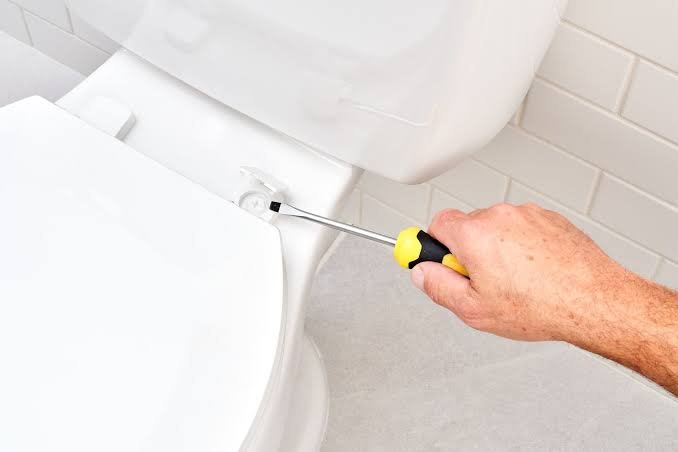
A toilet that moves or rocks when you sit down is more than a minor annoyance. Even a small amount of movement means the toilet is not being held firmly against the floor, and the cause should be identified before the problem gets worse.
The good news is that a slightly loose toilet can sometimes be corrected without replacing the toilet or removing it completely. The problem may be as simple as an uneven floor or loose mounting nuts. In other cases, the closet flange underneath the toilet may be damaged, poorly supported, or positioned incorrectly.
The important thing is not to keep tightening the toilet bolts until the movement disappears. Toilet bowls are made from vitreous china or similar ceramic material, and excessive tightening can crack them. Manufacturer installation instructions specifically recommend tightening mounting hardware evenly while avoiding overtightening.
This guide explains how to find the cause of a wobbling toilet, what you can safely repair yourself, and when the toilet needs to be removed or inspected by a qualified plumber.
Why Does a Toilet Wobble?
A toilet normally rests firmly on the finished floor and is secured to the closet flange with mounting hardware.
When you sit down and the bowl moves, something is allowing that movement.
The simplest possibility is an uneven floor. The toilet may be properly installed but have a small gap underneath part of its base.
Loose mounting hardware is another possibility. Over time, the nuts securing the toilet can become less secure, although they should not be aggressively tightened.
There can also be a problem underneath the toilet. A damaged closet flange, deteriorated flooring, or a broken mounting point can prevent the bowl from sitting securely.
A worn or damaged toilet seal can also become a concern if the toilet has been moving repeatedly. The seal is part of the watertight connection between the toilet and drain system, so continuing to rock the toilet can compromise that connection. Kohler’s installation guidance warns that lifting or rocking a toilet after it has been set can break the watertight seal and require a new gasket.
First, Find Out Where the Movement Is Coming From
Before touching the mounting bolts, sit carefully on the toilet and notice how it moves.
Does the entire bowl rock from side to side?
Does only one edge lift slightly?
Does the toilet move forward and backward?
Or does the bowl feel stable while only the toilet seat moves?
That last possibility is easy to overlook.
If the porcelain bowl itself remains stationary but the seat moves, the problem may simply be the seat hardware rather than the toilet installation.
Look underneath the toilet seat hinges and check whether the seat mounting hardware is loose. Seat mounting systems differ, so follow the instructions for your particular model when tightening them.
If the entire toilet bowl moves against the floor, continue with the checks below.
Check for Water Around the Base
Before repairing the wobble, inspect around the bottom of the toilet.
Look for standing water, dampness, staining, or a recurring wet area around the base.
Do not assume that every wet toilet floor means the toilet seal has failed. Water can come from the supply connection, tank, condensation, cleaning, or another nearby source.
However, if water repeatedly appears around the toilet base, the issue deserves attention before you simply tighten the bowl.
A moving toilet can disturb its seal. Because of that, a wobbling toilet accompanied by unexplained water should be treated more seriously than a dry toilet with a very small amount of movement.
Check the Toilet Mounting Nuts
Most floor-mounted toilets use bolts connected to the closet flange. The bolts pass through openings in the toilet base, and nuts secure the bowl in place.
The exact hardware varies by toilet.
Remove the decorative caps if your toilet has them and inspect the mounting nuts.
If a nut is clearly loose, it may be possible to tighten it slightly with an appropriate wrench.
Work gradually.
Tighten one side a little, then the other side a little, rather than tightening one side fully while leaving the other untouched.
This helps keep pressure more even.
Do not use excessive force. Manufacturer instructions for toilet installation warn against overtightening because the bowl can crack.
After a small adjustment, gently test the toilet again.
If it remains loose, stop tightening.
The problem may not be the nuts.
What If the Toilet Still Wobbles After Tightening?
This is where many DIY repairs go wrong.
A person notices that the toilet still rocks, tightens the nuts harder, and keeps going until the movement becomes smaller.
That can put unnecessary stress on the porcelain without fixing the real problem.
If the mounting hardware is secure but the toilet still rocks, look underneath the rim of the base and determine whether there is a gap between the toilet and floor.
An uneven floor can leave part of the toilet unsupported.
A small, purpose-made toilet shim can sometimes be used to stabilize a toilet that sits on a slightly uneven surface.
The shim should support the bowl without forcing it upward or putting damaging pressure on the porcelain.
Do not improvise with materials that can compress, decay, absorb water, or interfere with the toilet’s finished appearance.
The right shim material depends on the product and installation conditions.
How to Use a Toilet Shim for a Small Amount of Movement
If the floor is sound and the mounting hardware is secure, a small shim may solve a minor rocking problem.
Step 1: Identify the rocking point
Gently press on opposite sides of the bowl.
Watch which edge rises when you apply light pressure.
This helps identify where the gap exists underneath the base.
Step 2: Choose a suitable shim
Use a shim designed for stabilizing toilets or another material specifically appropriate for a damp bathroom environment.
The shim should be thin enough to correct the gap without lifting the toilet significantly.
You are correcting a small amount of movement, not leveling an entire bathroom floor.
Step 3: Position the shim carefully
Slide the shim into the gap at the point where the toilet lifts.
Do not force it deeply underneath the toilet.
The shim should fill the gap rather than push the bowl substantially upward.
Step 4: Test the bowl
Sit carefully and check whether the movement has stopped.
You can also gently press the bowl from different directions with your hands.
If the toilet remains stable, trim or finish the exposed portion of the shim according to the product instructions.
Step 5: Recheck for movement
Test the toilet again after the repair.
If it still rocks noticeably, adding more shims may not be the right answer.
The cause may be below the toilet.
Do Not Use Caulk as a Substitute for Stabilizing the Toilet
Caulk can have a finishing role around a toilet installation, but it should not be used to disguise a toilet that is physically moving.
If the bowl rocks, fix the movement first.
Adding a thick bead of caulk around the base can make the installation look stable while the toilet continues moving underneath.
That does not solve the mechanical problem.
Some toilet installations also use sealant as part of the finished installation, but the manufacturer’s installation instructions for the particular toilet should be followed rather than treating caulk as the primary method of stabilization.
What Is a Closet Flange?
The closet flange is the fitting at the floor that connects the toilet to the drain and provides the mounting points for the toilet bolts.
You normally cannot inspect the entire flange while the toilet is installed because much of it is hidden beneath the bowl.
When a toilet continues wobbling despite secure mounting hardware and appropriate stabilization, the flange becomes one of the possible causes.
A flange can be cracked, damaged, poorly supported, or otherwise unable to hold the toilet securely.
Repairing a flange generally requires removing the toilet.
That also means dealing with the toilet’s seal during reinstallation.
Kohler’s installation instructions recommend inspecting the flange for cracks or damaged components when a toilet is removed and replacing damaged mounting hardware as required.
Signs the Closet Flange May Need Attention
A damaged flange is more likely when the toilet:
- Continues to move after the mounting nuts are properly adjusted.
- Has mounting hardware that does not stay secure.
- Has visible damage around the bolt area.
- Has developed a recurring leak around the base.
- Appears to shift because the mounting points underneath cannot hold it properly.
You cannot always confirm a flange problem without removing the toilet.
That is why repeatedly tightening the visible nuts is not a reliable repair strategy when the movement persists.
Could the Floor Be the Problem?
Yes.
The toilet may be perfectly sound while the floor underneath it is uneven or damaged.
This can happen with older flooring, previous bathroom renovations, tile installations, water damage, or areas where the subfloor has deteriorated.
Look around the base for cracked flooring, soft spots, lifted tile, or other signs of movement.
If the floor itself flexes when you step near the toilet, do not assume the toilet is the only problem.
A new shim may make the bowl feel more stable while the damaged floor remains underneath.
That is not a complete repair.
What If the Floor Is Soft?
A soft floor around a toilet deserves more attention than a slightly uneven floor.
Moisture can damage certain flooring and subfloor materials over time.
If pressing the floor near the toilet produces noticeable flexing, or if there is staining or persistent dampness, investigate the moisture source.
Do not simply seal around the toilet and ignore the floor.
In this situation, the correct repair may involve flooring or subfloor work as well as correcting the toilet installation.
When the Toilet Needs to Be Removed
You may need to remove the toilet to investigate the problem when:
The mounting hardware is secure but the bowl still moves significantly.
The closet flange may be damaged.
The floor underneath may be damaged.
There is a recurring leak at the base.
The toilet has been repeatedly rocked and the seal may have been disturbed.
The mounting bolts cannot be secured properly.
Once a toilet is removed, the old seal needs to be dealt with according to the new installation method. Manufacturer guidance commonly calls for removing the old seal and installing the appropriate new wax ring or gasket during reinstallation.
Do not plan to remove and replace the toilet casually if you do not have the tools and ability to safely handle the bowl.
What Happens to the Seal If the Toilet Is Lifted?
The toilet forms a watertight connection to the drain through a wax ring or another approved gasket system, depending on the installation.
Once the toilet has been properly placed and sealed, moving or lifting it can compromise that seal.
This is why it is important not to keep rocking the toilet during troubleshooting.
Kohler specifically cautions that moving or rocking a toilet after placement can break the watertight seal and require a new gasket.
If you have significantly moved the toilet while attempting a repair, do not assume the existing seal is still reliable.
A Simple Repair Decision
The following approach can help you decide what to do.
The toilet moves, but the seat stays still and a mounting nut is loose
A small, even adjustment may be enough.
Do not overtighten.
The mounting hardware is secure, but the bowl rocks slightly
An appropriate toilet shim may correct a small uneven-floor gap.
The bowl rocks significantly or repeatedly
Look for an underlying floor, flange, or installation problem instead of adding more shims.
There is water around the base
Investigate the source and avoid treating the wobble as purely cosmetic.
The floor feels soft
Investigate possible floor or moisture damage.
The flange or mounting area appears damaged
The toilet may need to be removed so the underlying installation can be inspected and repaired.
Common Mistakes to Avoid
Overtightening the mounting nuts
This is one of the most important mistakes to avoid.
The goal is to secure the toilet, not clamp the porcelain against the floor with as much force as possible.
Too much pressure can damage or crack the bowl.
Tightening only one side
A toilet should not be forced into position by heavily tightening one mounting point.
Make small, even adjustments and check the result.
Using caulk to hide movement
A bead around the base can improve appearance, but it does not replace proper support.
Fix the movement first.
Ignoring a leak
A wobbling toilet with water around its base deserves investigation.
Do not assume that drying the floor solves the issue.
Adding too many shims
Shims are useful for correcting small gaps, not for compensating for a badly damaged or severely uneven installation.
Excessive shimming can create its own problems.
Continuing to rock the toilet during testing
Repeated movement can compromise the seal.
Test gently and avoid unnecessary rocking. Manufacturer guidance specifically warns against moving or rocking the toilet after the seal has been set.
When Professional Help Makes Sense
A slightly loose mounting nut or small uneven-floor gap may be reasonable for a careful DIY repair.
Professional help becomes a better choice when the toilet has a significant leak, the floor is soft or damaged, the flange appears broken, the mounting hardware cannot be secured, or the toilet continues to move after reasonable stabilization.
It is also sensible to get help when removing the toilet is necessary but you are not comfortable disconnecting the water supply, handling the fixture, inspecting the flange, or installing a new seal.
The objective is not simply to make the bowl stop moving. The toilet needs to remain securely supported while maintaining a reliable connection to the drain.
How to Test the Toilet After Repair
Once the repair is complete, test it gently.
Sit down normally and check whether the bowl remains stable.
Press very lightly on the sides to see whether there is still movement.
Then inspect the floor around the base after flushing.
Look for unexpected water or dampness.
Also check the water supply connection for leaks.
If everything remains dry and the bowl stays firmly in place, continue observing it during normal use over the following days.
A repair that appears successful for five minutes but begins moving again during regular use has not solved the underlying issue.
How to Prevent a Toilet From Becoming Loose Again
Do not use the toilet as a support point for climbing, leaning, or pulling yourself up with excessive force.
When cleaning the bathroom, pay attention to changes around the toilet base.
A new wobble, recurring dampness, or movement in the floor is worth investigating early.
During other bathroom work, avoid striking or pushing the toilet unnecessarily.
Most importantly, do not treat every wobble as something that can be corrected by tightening a nut. Understanding why the toilet moved in the first place is the best way to prevent the repair from becoming a repeating problem.
Frequently Asked Questions
Is a wobbling toilet dangerous?
A loose toilet should not simply be ignored. Movement can indicate a problem with the mounting hardware, floor, flange, or seal. The seriousness depends on the cause, so the toilet should be inspected rather than repeatedly used without attention.
Can I fix a rocking toilet by tightening the bolts?
Sometimes a slightly loose mounting nut can be adjusted, but tightening the bolts is not always the answer. Overtightening can damage the porcelain, so stop if the toilet remains loose after a reasonable adjustment.
Should I put shims under a toilet?
A suitable shim can help stabilize a toilet that sits on a slightly uneven surface. It should not be used to compensate for major floor damage, a badly damaged flange, or a significant installation problem.
Should I caulk around a wobbly toilet?
Do not use caulk to solve physical movement. Stabilize the toilet first. Caulk may be used as a finishing material when appropriate for the installation and product instructions.
Why is my toilet still moving after I tightened the nuts?
Possible causes include an uneven floor, damaged flange, deteriorated flooring, or another installation problem. Continuing to tighten the nuts can damage the bowl without correcting the underlying issue.
Does a wobbling toilet mean the wax ring is bad?
Not necessarily. Wobbling can have several causes. However, repeated movement can disturb the watertight seal, so a toilet that has been significantly moved may need a new seal when it is removed and reinstalled.
When should I call a plumber for a wobbling toilet?
Get professional help when there is a persistent leak, damaged flooring, a broken flange, significant movement, or a mounting problem that cannot be corrected safely. Removing a toilet and repairing the underlying installation may require more skill than a simple adjustment.
Final Thoughts
A toilet that moves when you sit down should not be treated as a problem to hide with caulk or excessive tightening.
Start by checking whether the bowl itself is moving, inspect the mounting hardware, look for water around the base, and check whether the floor provides solid support. A small, appropriate shim can sometimes correct a minor uneven-floor problem, while a persistent wobble may point to a damaged flange, deteriorated flooring, or another installation issue.
Work carefully around the porcelain and never assume that tighter automatically means better. Toilet manufacturers caution against overtightening the mounting hardware because the bowl can crack.
The best repair is the one that fixes the reason the toilet is moving while preserving a secure, watertight installation.