
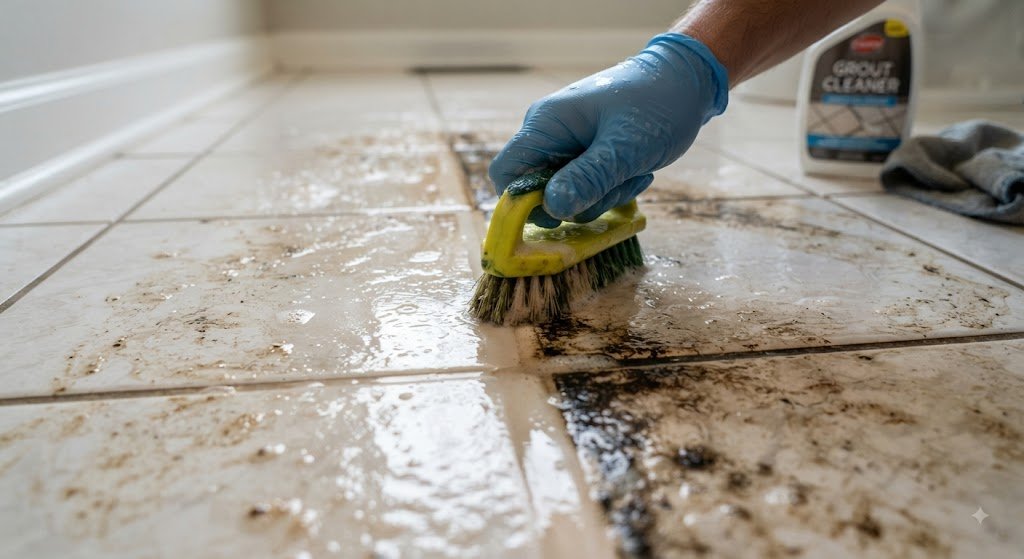
Grout can look fresh and even when it is first installed, but its colour often changes as the floor or wall is used. Light grout may gradually become grey, yellow, brown, or darker in busy areas. Bathroom grout can also develop darker patches, while kitchen grout may pick up stains from spills and everyday dirt.
A change in colour does not always mean the grout is permanently damaged. Dirt, soap residue, moisture, cleaning products, and normal wear can all affect its appearance. In some cases, however, discoloration can point to a moisture problem or grout that has started to deteriorate.
The right cleaning method depends on what caused the colour change. This guide explains the common reasons grout changes colour, how to clean it without unnecessarily damaging the joints, and when cleaning is no longer enough.
Why Grout Changes Colour Over Time
Grout is porous to varying degrees depending on its type and condition. This means it can collect substances from its surroundings.
A floor in a busy kitchen may become darker because dirt and food residue are repeatedly tracked into the joints. Bathroom grout may change colour because of soap deposits, moisture, and poor ventilation.
The change can be gradual, so you may not notice it until you compare an older section with an area that receives less traffic.
Different parts of the same room can also age differently. Grout near a doorway may become darker from foot traffic, while grout under cabinets or behind fixtures may remain close to its original colour.
Common Causes of Discoloured Grout
Dirt and everyday foot traffic
Floor grout is close to the level where dirt accumulates. Dust, soil, small particles from footwear, and cleaning residue can settle into the joints.
This is particularly noticeable in entrances, kitchens, hallways, and other high-traffic areas.
Regular cleaning can reduce this buildup, but grout that has not been cleaned for a long time may need more careful attention.
Soap and bathroom residue
In bathrooms, grout can collect residue from soap, shampoo, body products, and minerals in water.
The residue can create a dull or dirty appearance even when the tiles themselves look relatively clean.
If the discolouration is concentrated around a shower or bath, surface deposits may be contributing to the problem.
Moisture and poor ventilation
Persistent dampness can affect the appearance of grout.
Bathrooms with limited ventilation may stay wet for longer after showers. In some cases, darker grout may simply be damp or carrying surface residue. In other cases, persistent discoloration can be a sign that moisture is getting into places where it should not.
If grout remains unusually dark after the surrounding area has dried, or if you notice musty smells, damaged materials, or recurring dampness, investigate further instead of repeatedly scrubbing the surface.
[Internal link opportunity: article about finding small signs of water damage before they become expensive repairs]
Cleaning product residue
Some cleaning products can leave a film behind when they are not properly rinsed away.
Using more cleaner does not necessarily produce a cleaner floor. Excess product can collect in grout joints and attract additional dirt.
Always follow the product instructions and avoid mixing different cleaning chemicals.
Food and household stains
Kitchen grout can be exposed to coffee, tea, sauces, cooking oils, and other substances that may leave visible marks.
A spill that is cleaned quickly may cause little noticeable change, while repeated exposure can leave a more persistent stain.
Grout aging and wear
Grout can naturally become less attractive as it ages. Repeated cleaning, foot traffic, moisture, and general use can change its appearance.
If the grout is also cracking, crumbling, or falling out, the issue is no longer simply a colour problem. It may need repair or replacement.
Is Discoloured Grout Dirty or Permanently Stained?
You cannot always tell just by looking.
A useful first step is to clean a small, inconspicuous section using a suitable grout-cleaning method. If the colour improves significantly, surface buildup was probably contributing to the appearance.
If the grout remains discoloured after careful cleaning, the colour may be absorbed into the material or the grout itself may have changed with age.
Avoid repeatedly using stronger chemicals simply because the first cleaning did not restore the original colour. Aggressive cleaning can damage grout or surrounding surfaces without producing the result you want.
How to Clean Lightly Discoloured Grout
For routine dirt, start with the least aggressive reasonable approach.
1. Remove loose dirt
Sweep or vacuum the floor first.
On walls, wipe away loose dust and surface debris before applying any cleaning solution.
This prevents loose particles from becoming muddy while you clean.
2. Use a suitable grout cleaner
Choose a cleaner that is appropriate for your tile and grout.
Read the product label before applying it. Some cleaners are unsuitable for certain natural stone surfaces, delicate finishes, or particular grout types.
If you are unsure, test the cleaner on a small hidden area first.
3. Work on a small section
Rather than covering the entire floor with cleaning solution, work in manageable sections.
Apply the cleaner according to its instructions and give it the recommended contact time. Do not assume that leaving a chemical on the surface longer will improve the result.
4. Agitate the grout gently
A soft or medium-bristled grout brush can help loosen dirt from the joints.
Use controlled strokes rather than extremely hard scrubbing. The goal is to loosen buildup without wearing away the grout.
An old toothbrush can be useful for very small areas, although a purpose-made grout brush may make larger areas easier to clean.
5. Rinse away residue
After cleaning, remove the loosened dirt and cleaning residue according to the product instructions.
Do not leave a layer of cleaner sitting on the floor simply because the grout looks cleaner while it is wet.
Allow the area to dry before deciding whether further cleaning is necessary.
How to Deal With More Stubborn Grout Stains
Some stains require more work than routine dirt.
Before using a stronger cleaner, identify the type of surface you are working with. Ceramic and porcelain tiles can tolerate different cleaning methods than some natural stone materials.
A product designed specifically for grout may be more appropriate than a general household cleaner.
Apply it to a small test area first. Check the grout and surrounding tile for changes before treating the whole surface.
If the grout improves but does not return to its original colour, continuing to scrub may not produce much additional improvement. At that point, the stain may be deeper or the grout may simply have aged.
Be Careful With Household Cleaning Mixtures
It is tempting to search for increasingly powerful homemade cleaning combinations when grout remains dirty.
This can create unnecessary risks.
Never mix household cleaning chemicals unless the manufacturer specifically says that doing so is safe. In particular, combining incompatible cleaning products can produce dangerous fumes.
You also do not need a harsh chemical for every grout-cleaning job. Start with a suitable commercial grout cleaner or a mild cleaning approach that is compatible with your tile and grout.
Good ventilation is also useful when using cleaning products indoors. Open suitable windows or use the room’s ventilation system when appropriate.
What About Bleach?
Bleach is sometimes used to deal with heavily discoloured grout, but it should not automatically be the first choice.
Depending on the grout, tile, surrounding materials, and cause of the discoloration, bleach may not provide the result you expect. It can also be inappropriate for some surfaces.
If you are considering a bleach-based product, check the manufacturer’s directions carefully and make sure it is suitable for the surfaces being cleaned. Never mix bleach with other cleaning products.
If the problem is actually mold, moisture damage, deteriorating grout, or staining beneath the surface, bleach will not correct the underlying cause.
When Cleaning Is Not Enough
Cleaning cannot repair grout that is physically failing.
Look closely at the joints after cleaning. If grout is missing, powdery, deeply cracked, or falling apart, the problem requires repair rather than another round of cleaning.
Likewise, if grout repeatedly becomes dark in the same area, look for a possible source of moisture.
A bathroom floor or shower area that stays damp, develops a musty smell, or shows damage around nearby materials deserves closer inspection.
How to Prevent Grout From Becoming Discoloured Again
Prevention is easier when cleaning becomes part of normal floor maintenance rather than an occasional deep-cleaning project.
Sweep or vacuum tiled floors regularly so dirt does not have time to settle into the grout joints. Clean spills promptly, particularly in kitchens.
In bathrooms, allow moisture to leave the room after showers. Use available ventilation and give wet surfaces time to dry.
Avoid using excessive amounts of cleaning product. More product does not necessarily mean better cleaning, and residue can build up if it is not removed properly.
Where appropriate, a grout sealer may help reduce the amount of staining and moisture absorption. Whether sealing is suitable depends on the grout type and manufacturer’s recommendations. Some modern grout products have different maintenance requirements, so check the product information rather than assuming every grout needs the same treatment.
How Often Should You Clean Grout?
There is no single schedule that works for every home.
A kitchen floor used by several people every day may need more frequent cleaning than a lightly used guest bathroom.
Instead of waiting until grout becomes visibly dark, include grout joints in your normal floor-cleaning routine. A quick regular cleaning is usually easier than trying to remove months or years of accumulated dirt.
Bathrooms may also need more attention because moisture and product residue can collect around grout.
Pay particular attention to high-traffic areas and places where spills or water exposure are common.
Common Mistakes to Avoid
One mistake is using an abrasive brush and excessive force. Scrubbing harder is not always better, especially when the grout is already old or weakened.
Another is applying a strong chemical without checking whether it is compatible with the tile. A cleaner that works on one flooring material may damage another.
Do not flood the floor with water during cleaning. Excess moisture can move into areas where it should not go, particularly if grout or surrounding materials are already damaged.
Avoid cleaning over loose or crumbling grout without addressing the damage. The brush may remove even more material.
It is also a mistake to treat every dark grout joint as a simple dirt problem. Persistent discoloration can sometimes justify checking for moisture or another underlying issue.
When You Should Contact a Professional
Professional help may be appropriate when discoloration is accompanied by other signs of damage.
Consider getting an inspection if you notice persistent moisture, significant mold growth, a musty smell, damaged flooring beneath the grout, widespread grout failure, or suspected leaks.
You should also be cautious if the problem involves a shower or other waterproofed area and you suspect water is getting behind the tiled surface. Repairing visible grout without understanding the waterproofing system may not solve the problem.
If you rent your home, report recurring moisture or substantial flooring damage to the landlord or property manager before making permanent repairs.
Frequently Asked Questions
Why does white grout turn grey?
White grout can become grey because of dirt, foot traffic, cleaning residue, moisture, and general wear. The cause is easier to identify by looking at where the discoloration occurs and whether it improves after appropriate cleaning.
Can discoloured grout be made white again?
Sometimes. If the colour change is caused by surface dirt or residue, cleaning may restore much of the original appearance. Permanent staining, aging, or damaged grout may require a different solution, such as recoloring or replacement.
How can I clean grout without damaging it?
Start with a cleaner suitable for your grout and tile, use a suitable brush with moderate pressure, and follow the product’s instructions. Avoid aggressive scrubbing and unnecessary chemical treatments.
Why is my bathroom grout getting dark?
Moisture, soap residue, dirt, and poor ventilation can all contribute to darker grout. If the grout stays unusually dark after the area dries or the problem keeps returning, investigate possible moisture issues.
Does grout sealer prevent discoloration?
A suitable sealer can help some types of grout resist staining and moisture absorption, but it does not make grout permanently stain-proof. Proper cleaning and maintenance are still necessary.
Should I replace grout that has changed colour?
Not necessarily. If the grout is still firm and intact, cleaning or another surface treatment may be enough. Replacement becomes more appropriate when the grout is cracked, missing, crumbling, or otherwise failing.
Final Thoughts
Grout changes colour for many ordinary reasons. Dirt, moisture, soap residue, spills, cleaning products, and age can all affect how it looks.
Before reaching for an aggressive cleaner, identify what may be causing the discoloration and start with a suitable, controlled cleaning method. Work gently, test unfamiliar products in a small area, and never mix cleaning chemicals.
If the grout is crumbling, repeatedly becoming damp or dark, or showing other signs of damage, cleaning alone may not be the right answer. In those situations, finding the underlying problem can protect both the grout and the tiled surface around it.