
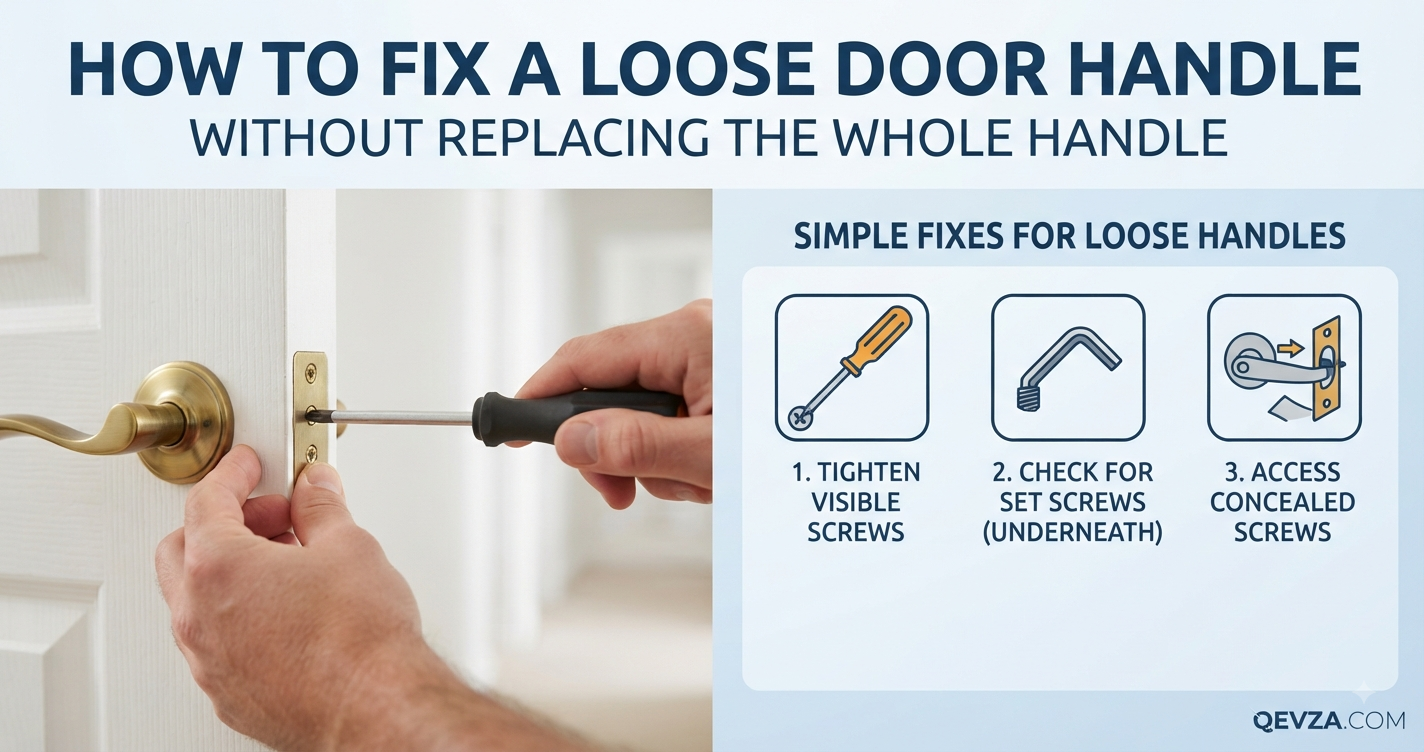
Grab a door handle, and instead of staying firm, it wobbles, drops, or spins loosely in your hand. This minor household annoyance happens on interior bedroom doors, bathroom entries, and exterior doors alike.
Many people assume a wobbly handle means the entire mechanism is broken and must be replaced. In most cases, however, the hardware is mechanically sound. It simply needs a quick adjustment to tighten up parts that have worked themselves loose over months of daily use.
This guide walks you through what causes the wiggle, how to inspect your specific handle style, and how to secure it using standard household tools.
What the Problem Usually Means
When a door handle feels loose, it indicates that the mechanical connection between the handle, the mounting plate, and the internal spindle has lost its tightness.
Every time you turn a knob or push down a lever, rotational force travels through the handle into a metal shaft called a spindle, which retracts the latch. If the screws holding the mounting plates together back out, or if the tiny set screw holding the handle to the shaft slips, the entire assembly begins to play and wobble.
Diagnosing the exact type of looseness helps you target the right fix immediately.
Common Reasons This Happens
Door hardware undergoes constant physical vibration and mechanical stress. Several distinct factors cause these parts to shift out of alignment.
-
Constant vibration: The kinetic force of opening, closing, and occasionally slamming doors naturally vibrates mounting screws loose over time.
-
Stripped wood fibers: Frequent use can wear out the wood inside the door frame or edge, causing screws to lose their grip and back out.
-
Loose set screws: Lever handles rely on a tiny tension screw on the underside of the neck to clamp onto the square metal shaft. If this loosens, the lever spins freely or slips off.
-
Worn internal springs: While less common for simple wobbles, internal components can fatigue after decades of heavy residential use.
What You Can Check Yourself
Before attempting any repairs, examine how your door handle is put together. Look closely at the plate flat against the door face.
-
Check for visible screw heads: If you see two screws holding the plate to the door, your hardware uses an exposed design.
-
Look for a smooth plate: If the plate has no visible screws, look closely along its outer rim for a tiny notch, slot, or pinhole. This indicates a concealed mounting system with a snap-on cover.
-
Inspect the handle neck: If the mounting plate is completely tight against the wood, but the knob or lever itself jiggles up and down, look underneath the handle grip for a hex socket.
[Internal link opportunity: article about essential tools every homeowner should keep in a basic toolkit]
How to Fix the Problem
Depending on how your handle is constructed, you can choose the correct repair method below.
Tightening Exposed Mounting Screws
If your handle plate features visible screw heads, this is a quick fix.
-
Hold the interior handle steady with one hand.
-
Insert a standard Phillips or flathead screwdriver into the screw heads.
-
Turn clockwise until snug. If the screw spins endlessly without tightening, the wood hole has likely stripped out.
Accessing and Tightening Concealed Screws
If your decorative plate hides the fasteners, you must expose them first.
-
Insert a thin flathead screwdriver or a putty knife into the small notch located on the edge of the circular plate.
-
Gently pry outward to pop the decorative cover plate away from the door, revealing the underlying mounting chassis.
-
Tighten the exposed internal screws firmly with a screwdriver.
-
Snap the decorative cover back over the chassis by pressing evenly with your palm.
Securing a Loose Lever with a Set Screw
Handles that slide back and forth on the spindle require a hex key (Allen wrench).
-
Locate the small hex socket on the underside of the handle neck.
-
Insert the correct size Allen wrench into the socket.
-
Turn the wrench clockwise to tighten the set screw against the internal metal spindle.
-
If this screw repeatedly backs out over time, remove it completely, apply a single drop of liquid threadlocker to the threads, and reinstall it.
What to Do If Screws Won’t Hold
If you turn a screw and it refuses to bite into the door, the mounting hole is stripped. You can easily rebuild the interior wood structure using basic items.
-
Unscrew and remove the handle assembly completely.
-
Dip two or three wooden toothpicks into standard wood glue.
-
Push the glued toothpicks tightly into the empty screw hole.
-
Snap off any excess wood flush with the door surface.
-
Reinstall the handle and drive the screw directly into the newly reinforced wood. The screw will grip the tight wood fibers securely.
[Internal link opportunity: article about fixing stripped screw holes in wood doors]
Common Mistakes to Avoid
-
Over-tightening hardware: Driving screws down with excessive force can warp metal plates or crack the finish of decorative handles. Stop turning once the plate sits flush.
-
Using power drills for final tightening: High-torque power drills can easily strip metal screw heads or damage delicate threading. Always finish tightening by hand.
-
Forcing concealed covers: Prying too aggressively on decorative snap-on plates can bend the soft metal. Work slowly around the edges to release the clips evenly.
When You Should Call a Professional
While loose handles are standard DIY projects, certain scenarios call for a qualified locksmith or handyman.
-
Complex mortise locksets: Heavy antique doors featuring internal mortise lock boxes have intricate internal linkages that can be difficult to realign if disassembled completely.
-
Damaged internal metal threading: If the internal chassis threads are stripped or cross-threaded beyond repair, replacement parts or professional hardware refitting may be required.
-
Commercial security doors: Exterior commercial-grade doors or heavy fire doors often require specialized hardware maintenance to remain compliant with safety codes.
How to Prevent the Problem in the Future
-
Perform annual maintenance: Once a year, walk through your home and check the hardware on high-use doors, giving mounting screws a quick turn if they feel slightly loose.
-
Avoid hanging items on handles: Discourage family members from hanging heavy bags, coats, or robes over door levers, as the downward leverage accelerates wear and loosens internal components.
Frequently Asked Questions
Why does my door handle keep getting loose every few months?
Vibration from slamming doors or heavy daily pulling naturally works screws loose. Adding a small drop of threadlocker to metal screws or using the toothpick-and-glue method for wood screws prevents this recurring issue.
What size Allen wrench do I need for a loose door lever?
Most standard residential door levers use either a 3/32-inch or a 2.5-millimeter hex key. Keeping a small hex key set in your household toolkit ensures you always have the right size on hand.
Can I fix a wobbly door handle without removing it?
Yes. If the problem is simply loose mounting screws on an exposed plate or a loose set screw on a lever neck, you can tighten them immediately without taking the handle apart.