
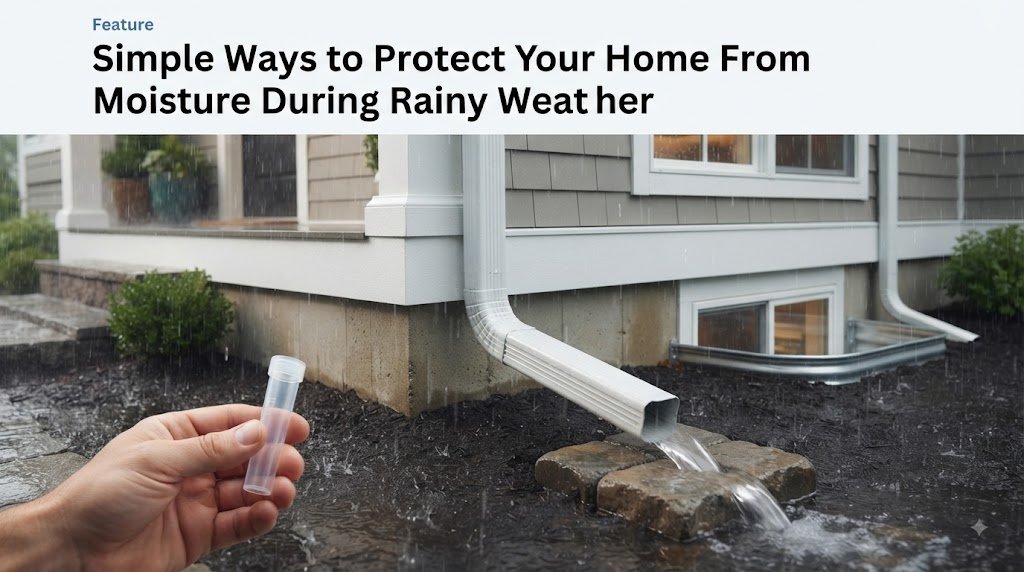
Rain can be good for gardens, lawns, and outdoor plants, but repeated wet weather can create problems around a house. Water can collect near the foundation, enter through damaged seals, overflow from blocked gutters, or find its way through small gaps around windows and doors.
The trouble is that moisture damage does not always appear immediately. A small leak may leave only a faint stain at first. Over time, repeated exposure can affect paint, wood, drywall, flooring, cabinets, and other household materials.
Protecting your home during rainy weather does not necessarily require major work. Many useful steps involve keeping water moving away from the house, checking vulnerable areas, fixing small problems early, and making sure indoor spaces can dry properly.
Why Rain Can Cause Moisture Problems
A house is designed to keep normal outdoor moisture outside, but water will eventually find weak points if drainage or protective materials are damaged.
Gutters may overflow. Downspouts may discharge water beside the foundation. Cracked exterior sealant can allow rain around a window. Roof damage can let water enter an attic or ceiling.
Moisture can also come from condensation. During periods of high humidity, bathrooms, kitchens, closets, and poorly ventilated rooms may stay damp longer than usual.
The important thing is to distinguish between ordinary temporary dampness and recurring moisture. A wet outdoor surface after rain is normal. A wall, ceiling, cabinet, or floor that repeatedly becomes damp deserves attention.
Keep Gutters Clear Before Heavy Rain
Gutters are one of the simplest parts of a house to overlook. Leaves, twigs, dirt, and other debris can accumulate inside them and restrict water flow.
When a gutter cannot carry water efficiently, rain may spill over its edges. Instead of being directed toward a downspout, water can fall close to exterior walls and foundations.
Before the rainy season or when heavy rain is expected, inspect accessible gutters from a safe position. Remove obvious debris if you can do so safely, or arrange for the gutters to be cleaned professionally.
Do not climb onto a roof or use an unstable ladder simply to perform routine maintenance. Falls can cause serious injuries, so difficult-to-reach gutters are better handled with appropriate equipment or professional help.
Make Sure Downspouts Move Water Away
A clean gutter will not do much good if the downspout releases water directly beside the house.
Look at where water leaves each downspout during rain. Ideally, it should be directed away from the foundation in a way that does not create a new pooling problem.
If water repeatedly collects beside the exterior wall, consider improving the drainage arrangement. A suitable downspout extension or properly designed drainage solution may help move water farther away.
Do not simply redirect large amounts of water toward a neighbor’s property, walkway, or another area where it can cause damage. The drainage solution should work safely for the property and surrounding area.
Check the Roof for Obvious Problems
The roof is your home’s primary barrier against rain from above. Small problems can become more noticeable during repeated wet weather.
From a safe location on the ground, look for obvious missing or damaged roofing materials, sagging areas, damaged flashing, or other visible changes.
Inside the home, inspect ceilings and attic areas for fresh stains, damp insulation, unusual odors, or signs that water has entered after rainfall.
Avoid walking on a wet roof unless you are properly equipped and trained to do so. A roof that appears easy to access can become extremely slippery during or shortly after rain.
Inspect Windows and Their Seals
Windows are another common location where rain can enter when exterior seals have deteriorated.
Check the edges of window frames for cracked, missing, or separated sealant. Inside, look at the lower corners and the wall directly below the window.
Signs such as peeling paint, discoloration, swollen trim, or dampness after rainfall may indicate that further inspection is needed.
Do not seal over an area without first considering where the water is coming from. Water can enter through one point and travel along a frame or wall before appearing somewhere else.
Check Exterior Doors
Rain can also enter around exterior doors, especially when weatherstripping, thresholds, frames, or nearby sealant have deteriorated.
After heavy rain, check the floor just inside exterior doors. Look for dampness, staining, swelling, or water trails.
Examine the lower section of the frame as well. If moisture repeatedly appears in the same place, identifying the entry point is more useful than simply drying the floor each time.
Keep Water Away From the Foundation
The ground around a house plays an important role in managing rainwater. If water consistently sits against the foundation, moisture may eventually find a path into lower parts of the building.
Walk around the outside of the home after rainfall. Look for puddles that remain for an unusually long time, soil erosion, overflowing drainage areas, or water flowing toward the building.
Small drainage improvements can sometimes make a noticeable difference, but larger grading or drainage problems may require professional assessment.
Avoid digging around a foundation without knowing where underground utilities, drainage systems, or other structures are located. What looks like a simple drainage project can become complicated quickly.
Trim Plants That Touch the House
Plants and shrubs close to exterior walls can make inspection and drying more difficult. Dense vegetation can also hide cracks, drainage problems, and damaged exterior surfaces.
Trim vegetation where necessary so that exterior walls, windows, drainage points, and other important areas remain visible and accessible.
This does not mean removing all plants around your home. The practical goal is to maintain enough clearance to inspect the building and prevent dense growth from staying wet against exterior surfaces.
Protect Basement and Lower-Level Areas
Basements, crawl spaces, and other lower areas deserve extra attention during rainy weather because water naturally moves downward.
Check floors, walls, corners, windows, exposed pipes, and other areas where water could enter.
A musty smell, damp patch, white mineral deposit on masonry, peeling surface, or standing water can be a reason to investigate.
If water is entering repeatedly, do not rely only on a fan or dehumidifier. Drying the room may improve the immediate conditions, but the source of the water still needs to be addressed.
Improve Airflow Inside Damp Rooms
Rainy weather often means higher outdoor humidity. If windows remain closed for long periods, some indoor areas may become damp.
Bathrooms and kitchens are especially important because normal household activities add moisture to the air.
Use exhaust fans where available, allow damp surfaces to dry, and avoid leaving wet towels or clothing in poorly ventilated rooms for extended periods.
Ventilation needs to be appropriate for the weather and the building. Opening windows can help under suitable conditions, but it may not be useful when outdoor air is extremely humid or rain is blowing inside.
Watch for Condensation
Not every moisture problem comes from rain entering the house. Condensation can also create damp surfaces when warm, humid air meets a cooler surface.
Windows, cold pipes, exterior walls, and poorly ventilated areas may show condensation more readily.
If you repeatedly find water droplets on the same surfaces, improve airflow where appropriate and investigate whether indoor humidity is unusually high.
The key is not to assume every damp surface is caused by a roof or plumbing leak. Understanding the pattern can help narrow down the likely source.
Check Under Sinks and Around Appliances
Rainy weather is a good reminder to inspect indoor plumbing too. A house can have an unrelated leak that becomes easier to notice when humidity is already high.
Look beneath kitchen and bathroom sinks, around washing machine connections, behind accessible appliances, and near water supply lines.
A dry cloth can help identify fresh moisture around accessible connections. If a connection is actively leaking and you cannot safely correct it, shut off the appropriate water supply if you know how and seek qualified assistance.
Do not ignore repeated small leaks simply because the water disappears quickly. Repeated moisture can gradually affect cabinets, flooring, walls, and other nearby materials.
Store Items Away From Damp-Prone Walls
During long periods of wet weather, avoid packing boxes and belongings tightly against walls in areas that are prone to moisture.
Leaving some space can make it easier to inspect the wall and notice changes. It also allows air to circulate around stored items.
Cardboard boxes are particularly easy to overlook because they can hide a damp wall or absorb moisture from the surrounding environment.
If an area has a history of moisture problems, consider storing valuable or moisture-sensitive belongings somewhere less vulnerable until the cause has been addressed.
What to Do During a Heavy Rain
When rain becomes heavy, avoid making risky inspections. You can still observe how water behaves from safe locations.
From indoors, check for new ceiling stains, dripping water, damp window areas, or water entering around doors.
From a safe outdoor location, observe whether gutters overflow, downspouts discharge correctly, or water collects near the foundation.
Do not climb onto a roof, enter a flooded area, or approach electrical equipment during dangerous weather just to perform an inspection. It is better to wait until conditions are safe.
Simple Maintenance Before the Rainy Season
A little preparation before repeated rainy weather can make problems easier to spot.
Walk around the property and check the main water-control points:
- Clean accessible gutters and check downspouts.
- Look for obvious roof damage from the ground.
- Inspect window and door seals.
- Check exterior walls for cracks or damaged finishes.
- Look for drainage problems around the foundation.
- Trim vegetation that blocks important inspection areas.
- Check basement, crawl space, and utility areas.
- Inspect under sinks and around water-using appliances.
- Make sure bathrooms and kitchens have suitable ventilation.
You do not have to complete every repair immediately. The first goal is to identify problems and decide which ones need prompt attention.
Common Mistakes That Can Make Moisture Problems Worse
One common mistake is ignoring a small leak because the affected area dries between rainstorms. Repeated exposure can still cause problems even when there is no standing water.
Another mistake is directing downspout water toward the foundation. A gutter system can appear to be working correctly while still sending too much water toward the house.
Painting over stains without finding the source is another poor long-term solution. It may make a wall or ceiling look better temporarily while leaving the underlying issue untouched.
It is also easy to focus only on the roof. Windows, doors, plumbing, drainage, condensation, and foundation areas can all contribute to moisture problems.
When to Get Professional Help
Some maintenance tasks are suitable for homeowners, but persistent water intrusion should not be treated as a cosmetic issue.
Consider professional help if you notice:
- A ceiling that is sagging or visibly swollen
- Water entering repeatedly during rain
- A leak that cannot be located
- Significant dampness inside walls or ceilings
- Repeated water pooling against the foundation
- Extensive flooring or drywall damage
- Water near electrical equipment
- A roof area that cannot be safely inspected
- Moisture that continues despite basic maintenance
If water reaches electrical outlets, wiring, appliances, or other electrical equipment, do not handle wet components. Electrical hazards can be serious, and the area should be assessed safely.
The appropriate professional depends on the likely source. A plumber can investigate plumbing-related leaks, while a roofing professional may be better suited to roof problems. Larger moisture or building-envelope issues may require a qualified contractor or building professional.
A Practical Rainy-Weather Routine
The easiest way to protect a home from moisture is to turn maintenance into a routine rather than waiting for visible damage.
Before heavy rain, check gutters, downspouts, visible roof areas, windows, doors, and drainage.
During or immediately after heavy rain, observe how water moves around the property from safe locations.
Afterward, inspect ceilings, lower rooms, windows, exterior doors, and other areas that have shown problems before.
Keeping notes or taking photographs can also help. If a stain, damp patch, or drainage problem changes over time, that record can make it easier to explain the problem to a professional.
Final Thoughts
Protecting your home from moisture during rainy weather is mostly about managing water before it becomes an indoor problem. Clean gutters, functional downspouts, sound exterior seals, sensible drainage, good ventilation, and regular inspections can all help reduce the chances of moisture being overlooked.
You do not need to wait for a major leak before taking action. Small changes are worth noticing, especially when they appear repeatedly or become worse after rainfall.
A few minutes spent checking vulnerable areas after a storm can give you useful information about how your home handles rain. When a problem is beyond a safe DIY inspection, getting professional help early may prevent a small moisture issue from becoming a much larger repair.
Frequently Asked Questions
How can I protect my home from moisture during rainy weather?
Start by keeping gutters and downspouts clear, directing water away from the foundation, checking windows and doors for damaged seals, inspecting the roof from a safe location, and improving ventilation in damp indoor areas.
Should I check my gutters before heavy rain?
Yes. Blocked or restricted gutters can overflow during heavy rainfall. Check accessible gutters and downspouts before periods of repeated rain, while avoiding unsafe roof or ladder work.
Why does water collect near my house after rain?
Possible causes include blocked drainage, poorly positioned downspouts, compacted soil, unsuitable grading, or insufficient drainage capacity. The exact cause depends on the property and local conditions.
Can plants cause moisture problems around a house?
Dense vegetation can make inspection difficult and may keep exterior surfaces damp. Keeping plants appropriately trimmed can make it easier to inspect walls, windows, drainage points, and other vulnerable areas.
How do I know if rain is getting through my windows?
Look for moisture, stains, peeling paint, swollen trim, or dampness around the lower parts of the frame after rainfall. The timing of the moisture can provide a useful clue.
Can ventilation help reduce moisture during rainy weather?
Suitable ventilation can help reduce indoor moisture from activities such as cooking and bathing. However, ventilation will not fix an exterior leak, plumbing leak, or water entering through a damaged building surface.
Should I paint over a water stain?
It is better to investigate the source first. Fresh paint can hide the visible mark but will not stop an active leak.
When should I call a professional?
Get professional assistance when water intrusion is persistent, the source cannot be identified, structural materials appear damaged, water reaches electrical components, or the area cannot be inspected safely.