
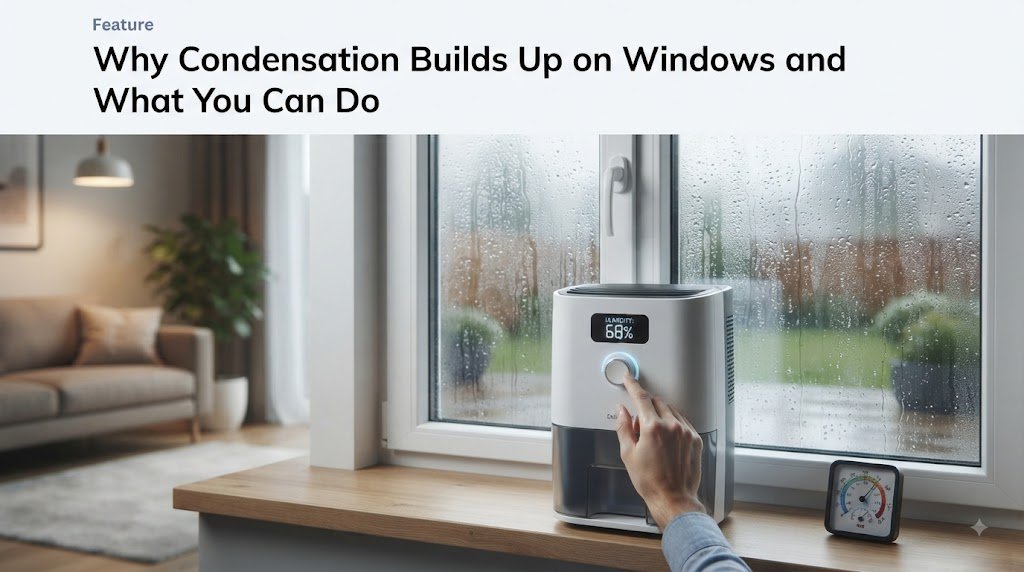
Waking up to water droplets covering the inside of your windows can be frustrating. You may wipe the glass dry in the morning, only to find the same problem again the next day.
Window condensation is common, especially when indoor air contains a lot of moisture and the glass becomes cold. It does not automatically mean that your windows are leaking or damaged. In many cases, the moisture is coming from inside the home and collecting on the cooler glass surface.
However, persistent condensation should not simply be ignored. Repeated moisture around windows can contribute to peeling paint, damaged wooden frames, staining, and damp areas around the opening.
Understanding why condensation builds up makes it much easier to decide what to do. The good news is that several simple changes can often reduce the problem.
What Is Window Condensation?
Condensation happens when moisture in the air turns into liquid water after coming into contact with a cooler surface.
Think about a cold glass of water on a warm day. Water droplets can form on the outside of the glass because the surrounding air contains moisture and the surface is cooler.
A similar process can happen on your windows. Warm, moisture-filled indoor air reaches cold glass, cools down, and releases some of its moisture as tiny water droplets.
This is why condensation is often more noticeable during cooler weather, overnight, or in rooms where moisture levels are high.
Why Does Condensation Build Up on Windows?
The main ingredients are moisture in the air and a surface cold enough for that moisture to condense.
Everyday household activities can add water vapor to indoor air. Cooking, bathing, drying clothes, washing floors, and even breathing contribute some moisture.
When that moisture has nowhere to escape, indoor humidity can rise. If the window glass is significantly cooler than the surrounding air, condensation becomes more likely.
The amount of condensation can vary from room to room. A bathroom may develop droplets quickly after a hot shower, while a bedroom may show condensation in the morning because the room remained closed overnight.
Why Is Condensation Worse in Some Rooms?
Not every room produces the same amount of moisture.
Bathrooms and kitchens are common trouble spots because bathing, showering, boiling water, cooking, and dishwashing add moisture to the air.
Bedrooms can also experience condensation, particularly overnight. Several hours of breathing in a closed room can increase humidity, while the glass may become cooler as outdoor temperatures fall.
Rooms with limited ventilation may have a similar problem because moisture remains trapped instead of being removed.
Indoor Humidity Plays a Major Role
Indoor humidity is one of the most important factors when dealing with condensation.
If the air contains more moisture, there is more moisture available to collect on cold surfaces.
A simple hygrometer can help you understand what is happening inside your home. Instead of guessing whether a room is humid, you can monitor it and see whether conditions change after cooking, bathing, drying clothes, or improving ventilation.
There is no single humidity level that guarantees a condensation-free home because window temperature, outdoor weather, insulation, ventilation, and other factors also matter.
If condensation repeatedly appears, tracking humidity can help you identify patterns and decide which changes are worth trying.
Poor Ventilation Can Make Condensation Worse
Good ventilation gives moisture a way to leave the home.
Without enough airflow, moisture from normal household activities can remain suspended in the indoor air for longer periods.
Use bathroom exhaust fans during showers and for a while afterward when practical. In the kitchen, use an extractor or range hood when cooking, especially when steam is being produced.
Opening windows can also help in suitable weather. However, this is not always the best option. If outdoor air is already very humid or rain is entering, opening a window may not improve the situation.
Dry Wet Clothes Carefully
Drying clothes indoors can add a substantial amount of moisture to the surrounding air.
If you regularly dry laundry inside, choose a room with suitable ventilation when possible. Keep the room ventilated and avoid placing large amounts of wet clothing in a small closed space.
A common pattern is to notice heavy condensation in the same room where clothes are dried. If this happens, moving the drying area or improving ventilation may make a noticeable difference.
Use Kitchen Ventilation While Cooking
Cooking can release a surprising amount of moisture, especially when boiling water or preparing foods that produce steam.
Use an extractor hood when available and keep lids on pots when appropriate. These simple habits can reduce the amount of water vapor released into the room.
If your kitchen window becomes wet every time you cook, consider the timing. Condensation that appears mainly during cooking is more likely to be related to indoor moisture than an exterior window leak.
Reduce Moisture After Showers
Bathrooms often produce some of the highest short-term moisture levels in a home.
Run the exhaust fan during a shower and afterward when practical. Keep the bathroom door managed in a way that prevents large amounts of humid air from spreading throughout the home.
If there is no suitable ventilation, moisture may settle on windows, mirrors, walls, and other cooler surfaces.
Drying wet surfaces after use can also help keep excess water from remaining in the room.
Wipe Condensation From the Glass
If water droplets have already formed, wiping them away can help prevent moisture from sitting on the frame and surrounding surfaces.
Use a clean microfiber cloth or suitable squeegee and pay attention to the lower edge of the glass and sill.
This does not solve the underlying cause, but it can reduce the time that liquid water remains in contact with the frame and surrounding materials.
If you have wooden frames, drying visible water is particularly useful because repeated moisture exposure can contribute to swelling or deterioration of the finish.
Keep Window Sills Clear
Curtains, blinds, furniture, and other objects can sometimes restrict airflow around windows.
You do not necessarily need to remove curtains or blinds. Instead, look for situations where they trap damp air against the glass for long periods.
Allowing some air movement around the window can help the surface dry more readily.
This is particularly useful when condensation repeatedly forms on one window while nearby windows remain relatively dry.
Improve Airflow Between Rooms
Moisture can move from one room to another. A steamy bathroom, for example, can release humid air into a hallway or bedroom.
Think about where moisture is created and where it ends up. It is usually more effective to remove moisture near its source than to allow it to spread throughout the house.
Using suitable ventilation in kitchens and bathrooms can help keep humidity from accumulating elsewhere.
Consider a Dehumidifier
A dehumidifier can be useful when indoor humidity remains high despite ordinary ventilation and moisture-control habits.
If you use one, choose a unit suitable for the room and follow the manufacturer’s instructions. Keep the water collection container clean and empty it as required.
A dehumidifier can reduce moisture in the air, but it should not be considered a replacement for repairing a roof leak, plumbing leak, damaged window seal, or other source of water intrusion.
If a room remains damp because water is entering through the building, the source needs attention.
Check Whether the Condensation Is Inside or Outside
This simple observation can prevent a lot of confusion.
Condensation on the inside usually means indoor moisture is meeting a cold glass surface.
Condensation on the outside can occur when outdoor air is humid and the exterior glass is cooler than the surrounding air. This is not necessarily a problem with the window.
Condensation between panes of double- or triple-glazed glass is different. It may indicate that the sealed glazing unit has lost its seal and may require further assessment.
Knowing where the moisture is located is therefore an important first step.
Check the Window Frame and Sill for Damage
Repeated condensation should prompt you to inspect the surrounding materials.
Look for peeling paint, swelling, dark staining, soft wood, damaged sealant, or deterioration around the frame.
Do not assume every dark mark is caused by condensation. Water may also enter from outside through damaged flashing, sealant, roofing, or the window installation.
The timing can provide a useful clue. Moisture that appears mainly during cold mornings may suggest condensation, while water that appears specifically after rainfall may point toward exterior water intrusion.
Why Simply Wiping the Windows May Not Be Enough
Wiping condensation is useful, but it treats the symptom rather than the source.
If you have to dry the same windows every morning, look at what is causing the moisture. Ask yourself:
- Is the room poorly ventilated?
- Are showers producing a lot of steam?
- Is laundry being dried indoors?
- Does cooking create heavy moisture?
- Is indoor humidity consistently high?
- Is the window unusually cold?
- Is moisture actually coming from outside?
Once you identify the pattern, you can choose a more useful solution.
Common Mistakes When Dealing With Condensation
One common mistake is keeping every room tightly closed in an attempt to stay warm. While reducing drafts can improve comfort, completely restricting airflow can allow indoor moisture to build up.
Another mistake is drying laundry in a small room with no ventilation and then wondering why the windows become soaked.
A third mistake is assuming that all condensation is a sign of defective windows. Window temperature and indoor humidity both matter, and condensation can occur even with properly functioning windows.
It is also unhelpful to ignore repeated water around the frame. Even when condensation is the original cause, leaving liquid water on the sill or frame for long periods can contribute to material damage.
A Simple Daily Routine for Wet Windows
If condensation is a regular problem, a short routine can make it easier to manage.
In the morning, check the affected windows and wipe away visible water. Look at the sill and lower frame rather than cleaning only the glass.
During the day, use suitable ventilation when cooking, bathing, or drying clothes.
If possible, monitor indoor humidity and note when condensation is worst. After several days, you may start seeing a clear pattern.
This simple approach is often more useful than repeatedly buying cleaning products or changing the window without understanding the cause.
When Window Condensation May Need Further Investigation
Occasional condensation is not automatically a serious problem. Persistent or unusual moisture deserves closer attention, especially when it affects the frame or surrounding wall.
Consider further investigation if:
- Water regularly collects on the sill.
- Wooden frames are swelling or becoming soft.
- Paint repeatedly peels around the window.
- The surrounding wall becomes stained.
- Moisture appears between glazing panes.
- Water appears mainly after rainfall.
- A musty smell persists around the window.
- Condensation remains severe despite reasonable moisture control.
If the cause is unclear, a qualified window professional, building professional, or appropriate contractor can help determine whether the issue involves condensation, installation, drainage, seals, or another source of moisture.
Final Thoughts
Condensation builds up on windows when moisture in the air meets a surface that is cold enough for that moisture to turn into water droplets. It is a common household issue, and it does not automatically mean that your windows are leaking.
The most useful response is to control excess indoor moisture, improve ventilation where appropriate, wipe away visible water, and keep an eye on the window frame and sill.
If condensation keeps returning, do not stop at wiping the glass. Look for the pattern. Consider where moisture is being produced, how air moves through the room, how cold the glass becomes, and whether the moisture is actually coming from outside.
A little observation can often tell you much more than repeatedly treating the visible water.
Frequently Asked Questions
Why do my windows get wet inside at night?
Indoor moisture can build up overnight while the glass becomes cooler. Bedrooms can be particularly affected because people release moisture through normal breathing while the room may have limited airflow.
How can I stop condensation on windows?
Reduce excess indoor moisture, improve suitable ventilation, use bathroom and kitchen exhaust fans, manage indoor laundry drying, wipe away visible water, and consider monitoring humidity to understand the conditions in the room.
Is condensation on windows a sign of a leak?
Not necessarily. Condensation commonly forms when humid indoor air contacts cold glass. However, water that appears specifically after rain or repeatedly enters around the frame may have another cause.
Why does condensation form between double-glazed window panes?
Moisture between sealed glass panes can indicate that the insulating seal of the glazing unit has failed. This is different from ordinary condensation on the room-facing surface.
Does opening windows reduce condensation?
Opening windows can help when outdoor conditions are suitable because it can replace humid indoor air with drier air. However, if outdoor air is already very humid or rain is entering, opening windows may not be helpful.
Can drying clothes indoors cause window condensation?
Yes. Wet clothing releases moisture into the surrounding air as it dries. In a poorly ventilated room, that moisture can contribute to condensation on cooler surfaces.
Should I wipe condensation from my windows?
Yes. Wiping away visible water can reduce the amount of moisture sitting on the glass, sill, and frame. It is especially useful for protecting moisture-sensitive materials such as unfinished or damaged wood.
Can a dehumidifier help with window condensation?
A dehumidifier can help when indoor humidity is high by removing moisture from the air. It works best as part of a broader moisture-control approach and should not be used as a substitute for repairing an active water leak.
When should I be concerned about window condensation?
Occasional droplets are usually less concerning than persistent heavy condensation. Pay closer attention when water regularly collects on the sill, frames become damaged, stains appear on surrounding walls, moisture forms between glazing panes, or water appears after rainfall.