
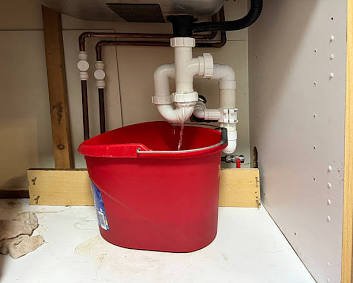
A small puddle under a sink can be easy to dismiss, especially when there is only a little water and the leak seems to stop on its own. But even a slow drip deserves attention. Water can collect beneath cabinets, soak stored items, damage the cabinet base, and eventually contribute to mold or other moisture problems.
Finding the source is not always as difficult as it sounds. The tricky part is that water does not always drip directly below the point where the leak starts. It can run along a pipe, fitting, hose, or cabinet surface before reaching the floor.
The safest approach is to empty the area, dry everything, and then watch the plumbing while the sink is used. By testing one part at a time, you can often narrow down where the water is coming from without dismantling the entire system.
Why a Small Sink Leak Can Be Hard to Locate
Water follows the easiest path available.
A leak from a connection near the back of the cabinet may run along the underside of a pipe before dripping at the front. Water from the sink drain can also travel down the outside of a fitting before appearing lower down.
This means the wettest spot is not necessarily the source.
The first goal is therefore not to tighten every connection you can see. Instead, try to identify exactly when the water appears and which component becomes wet first.
A leak that appears only when the tap is running may have a different cause from one that continues when the sink has not been used for several hours.
What You Should Do Before Looking for the Leak
Remove cleaning products, bottles, food containers, and anything else stored beneath the sink.
Dry the cabinet floor, pipes, valves, and visible connections thoroughly with a cloth or paper towel.
Keep the area as dry as possible before testing. If everything is already wet, it becomes much harder to tell where new water is coming from.
If water is collecting quickly, or a supply hose has failed, turn off the appropriate water supply before continuing.
Do not place your hands into standing water if you are unsure what may be present in the cabinet. If electrical equipment or wiring is nearby, take extra care and seek professional help if there is any safety concern.
Check Whether the Leak Comes From the Sink Basin
Start at the top rather than underneath.
Run a small amount of water into the sink and watch underneath the basin.
Pay attention to the area around the drain opening. Water can sometimes escape around a drain connection if the seal or fitting has deteriorated.
You can also fill the sink partially and allow the water to sit for a short time.
If water appears underneath while the tap is not running, the sink drain or another part of the basin may be involved.
If the cabinet remains dry until you turn on the tap, the supply lines, tap connections, or drain system become more likely suspects.
Check the Drain Connections
Under the sink, you will usually see the drain assembly leading toward the waste pipe.
Look at each visible connection.
Common areas to inspect include:
- The connection directly beneath the sink drain
- Slip-joint connections on the trap
- Connections between the trap and waste pipe
- Joints on a dishwasher drain hose where applicable
- Any visible extension pieces
Look for droplets, dampness, white or greenish deposits, staining, or areas that repeatedly become wet.
Do not assume a connection is leaking simply because it looks old. Watch it during a controlled test.
[Internal link opportunity: article about common causes of bathroom sink drainage problems]
Use a Dry Tissue to Trace a Tiny Leak
A dry paper towel can help locate a very small leak that is difficult to see.
Wrap or lightly press the towel around one connection at a time. Do not push it into moving plumbing or place it where it could become trapped.
Run the water and check the towel.
If one particular fitting becomes wet while nearby areas remain dry, you have a useful clue.
You can repeat this process at different connections.
For very small leaks, this method can reveal moisture before enough water has collected to form a visible drip.
Check the Flexible Supply Hoses
If water appears when the tap is running, inspect the flexible hoses underneath the sink.
These hoses connect the tap to the water supply. Depending on the installation, there may be separate hot and cold supply lines.
Look for:
- Dampness around the threaded connections
- Cracks or damage along the hose
- Corrosion around metal fittings
- A hose that has become sharply bent
- Water appearing near the shut-off valve
Run the tap for a short period while watching the connections.
If a supply hose is leaking under pressure, the water may appear quickly when the tap is opened.
Do not tighten a connection repeatedly just because it is wet. A damaged washer, hose, valve, or fitting may be the actual cause, and excessive tightening can damage components.
Check the Shut-Off Valves
The small valves underneath the sink control the water supply to the tap.
Look around the valve body, handle, and connection points.
A valve can develop a slow leak around its stem or connection. You may notice a small drop forming only after the water has been running.
If the valve is visibly corroded, damaged, or difficult to operate, do not force it.
A shut-off valve that cannot safely isolate the water supply can become a problem during future plumbing repairs, so a qualified plumber should deal with a faulty valve.
Check the P-Trap
The curved section of drainpipe underneath the sink is commonly called the P-trap.
It holds water as part of the drainage system and usually has one or more removable connections.
Inspect the trap carefully for moisture, cracks, corrosion, or leaking joints.
A trap leak may become more obvious when the sink is draining because water is passing through it.
Run the tap for a short period and watch the trap while the water moves through the drain.
If you see water forming at one connection, dry the area and test it again to confirm that the same location becomes wet.
If the trap is cracked or badly corroded, replacement may be necessary rather than simply tightening the connection.
Test the Drain and Supply Separately
If you cannot tell whether the leak comes from the water supply or drain system, test them separately.
First, run the tap while allowing the water to drain normally. Watch all visible connections.
Then, if the sink design allows it, fill the basin with a modest amount of water and let it drain while you continue watching underneath.
The difference can be useful.
If water appears only while the tap is running, a pressurized supply connection is worth checking closely.
If the leak appears when the basin drains, focus more attention on the drain assembly, trap, and waste connections.
If water appears even when the sink has not been used, a pressurized supply-side leak becomes more likely.
This does not provide a guaranteed diagnosis, but it helps narrow the search.
What If the Leak Appears to Come From the Sink Drain?
A leak around the sink drain connection may be caused by a deteriorated seal or a loose or damaged component.
Because the drain connects directly to the basin, a problem there can allow water into the cabinet whenever the sink is used.
Do not immediately apply sealant around the outside of the fitting.
Sealant may hide the visible symptom without correcting a damaged or poorly seated connection. It can also make later repairs more difficult.
If the drain assembly needs to be removed and resealed, follow the sink manufacturer’s instructions or have a plumber handle it if you are not comfortable with the work.
What If the Leak Is Coming From the Dishwasher Hose?
In kitchens, the sink cabinet may contain a dishwasher drain hose.
Inspect the hose where it connects to the sink drain system or garbage disposal, where applicable.
Check for loose clamps, cracks, or water marks.
A dishwasher-related leak may only appear when the dishwasher is draining, so a normal sink test might not reveal it.
If the cabinet stays dry during normal sink use but becomes wet after a dishwasher cycle, investigate the dishwasher drainage connection.
[Internal link opportunity: article about finding early signs of water damage under kitchen cabinets]
Can You Tighten a Leaking Connection Yourself?
Sometimes a loose accessible connection can be corrected with a small adjustment, but tightening should not be treated as the solution to every leak.
Some plumbing joints rely on washers or seals rather than the threads themselves. If the washer has deteriorated, tightening the fitting may not stop the leak.
Overtightening can also deform a washer, damage plastic fittings, or make future removal difficult.
If a connection is visibly damaged or already tight but still leaking, the appropriate repair may involve replacing a washer, hose, valve, or fitting.
If you are unsure which component provides the seal, stop before taking the connection apart.
What Not to Do When You Find a Leak
Do not cover the leaking area with tape or sealant and assume the problem is fixed. Temporary measures can hide continuing water damage.
Do not keep tightening a fitting that is already difficult to turn.
Do not disconnect pressurized supply lines without first shutting off the relevant water supply.
Do not ignore a tiny drip simply because the cabinet is still usable. Small leaks can continue for long periods and damage surfaces that are difficult to see.
Do not use the location of the puddle alone to identify the source. Always trace the water back toward the highest point where fresh moisture appears.
When You Should Call a Professional
A small leak does not always require a plumber, but professional assistance is the safer choice when the plumbing is damaged, inaccessible, or difficult to isolate.
Contact a qualified plumber if:
- A supply hose is cracked or leaking heavily.
- A shut-off valve is damaged or will not close.
- A pipe or trap is cracked.
- Water is coming from inside a wall or cabinet structure.
- The leak continues after a reasonable basic inspection.
- You find significant corrosion around plumbing connections.
- You cannot determine which component is leaking.
- The leak is causing substantial water damage.
- You need to disconnect plumbing that you are not confident working on.
For renters, contact the landlord or property manager when the plumbing is part of the property’s maintenance responsibilities.
If water is flowing rapidly and you can safely access the relevant shut-off valve, turn off the water and arrange professional help.
How to Prevent Small Sink Leaks
Regular inspection is one of the easiest ways to catch plumbing problems early.
Every so often, remove everything from beneath the sink and look at the pipes and connections. Check for moisture, staining, corrosion, or unusual odors.
Keep bottles and stored items from pressing against flexible hoses and valves.
Avoid using the plumbing cabinet as a place to store heavy objects that could knock into pipes.
After replacing a tap, filter, dishwasher, or other plumbing component, check the connections periodically for signs of moisture.
It is also useful to know where the sink’s water shut-off valves are located. If a hose suddenly fails, being able to isolate the supply quickly can limit the amount of water released.
Frequently Asked Questions
Why is there water under my sink but I cannot see a leak?
Water can travel along pipes or cabinet surfaces before collecting at a lower point. Dry the area completely and use controlled water tests to identify where fresh moisture first appears.
How can I tell if the leak is from the drain or water supply?
A supply leak often appears when the tap is running and the system is under pressure. A drain leak is more likely to appear when water is flowing out of the sink. Testing these situations separately can help identify the source.
Should I tighten the pipe if it is leaking?
Only if the connection is designed for that type of adjustment and you can do so safely. A worn washer, cracked fitting, or damaged valve will not necessarily be fixed by tightening, and excessive force can make the problem worse.
Is a small leak under a sink serious?
A small leak may not be an emergency, but it should not be ignored. Continued moisture can damage the cabinet, flooring, stored items, and surrounding materials.
How do I find a very slow leak?
Dry the plumbing completely, then run water through the system while watching one connection at a time. A dry tissue can also help reveal tiny amounts of moisture.
Should I call a plumber for a small sink leak?
Not every small leak requires professional help. If you can safely identify a simple, accessible problem and understand the appropriate repair, basic maintenance may be reasonable. Call a professional when the source is unclear, components are damaged, or the work involves pressurized plumbing you are not comfortable handling.
Final Thoughts
Finding a small leak under a sink is mainly a matter of careful observation. Do not assume the wettest point is the source. Dry everything first, then test the tap, drain, supply hoses, valves, and trap while watching for the first sign of fresh moisture.
A dry tissue and a controlled water test can reveal leaks that are difficult to see.
If you find a damaged hose, cracked pipe, faulty shut-off valve, or persistent leak that you cannot confidently repair, professional help is the sensible option. Dealing with a small leak early is usually much easier than dealing with a damaged cabinet or flooring later.