
You walk into a room and suddenly notice a smudge, a line, or a splotch on the wall that wasn’t there before. Dark marks on interior paint are common, often appearing behind furniture, near high-traffic areas, or around light switches. While they can be unsightly, most of these marks are surface-level accumulations of dust, oils, or physical wear rather than signs of structural distress.
Understanding why these marks appear is the first step toward removing them without damaging your paint finish. This guide will help you identify what you are looking at and provide safe, effective methods to restore your walls.
What the Problem Usually Means
In most cases, a dark mark on a wall is simply a buildup of materials that have adhered to the paint’s surface. Paint—especially matte or flat finishes—is porous. Over time, it acts like a mild filter, trapping airborne dust, cooking grease, and microscopic particles from everyday life.
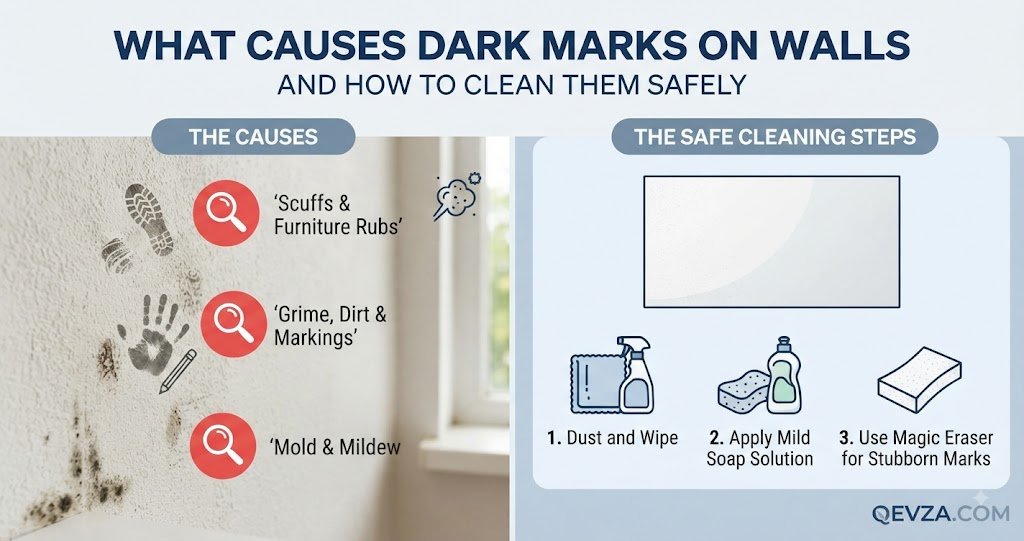
When you see a dark mark, it typically means one of three things:
-
Surface contamination: Dirt or oil has physically bonded to the paint.
-
Mechanical wear: The paint texture has been burnished or scuffed by contact.
-
Environmental moisture: Mold or mildew has begun to grow on the surface due to persistent humidity.
Common Reasons This Happens
Pinpointing the cause helps you choose the right cleaning approach. If you treat a grease stain like a dust smudge, you might end up just smearing it further.
-
Airborne particles: Dust, smoke from candles, and cooking oils circulate through the air. Over time, these settle on walls, particularly near vents or areas with poor airflow.
-
Human and pet contact: Oils from skin or fur naturally transfer to surfaces when people or pets brush against walls, creating dark “ghosting” or rub marks.
-
Electrostatic attraction: Dust particles can be attracted to certain areas of a wall due to static electricity, especially around electrical outlets or TV mounting areas.
-
Moisture and condensation: In bathrooms, kitchens, or laundry rooms, persistent dampness creates an ideal environment for mold and mildew spores to settle and darken.
-
Friction: Furniture backing or door handles repeatedly hitting a wall can compress the paint texture, making it appear darker or shinier than the surrounding area.
[Internal link opportunity: article about how to fix scuffed or damaged drywall]
What You Can Check Yourself
Before you start scrubbing, perform a quick “diagnostic” touch to determine the nature of the mark.
-
The Texture Test: Run a clean, dry microfiber cloth over the mark. If the dark color comes off easily, it is likely just loose dust or soot.
-
The Feel Test: If the area feels slightly tacky or greasy, you are likely dealing with transferred cooking oils or skin oils.
-
The Smell and Sight Test: If the mark is fuzzy, black, or green, and the wall feels cold or damp, it may be biological growth (mold).
-
The “Burnish” Check: If the wall feels smooth and the mark doesn’t wipe away, the paint itself may have been polished by friction. In this case, cleaning will not help, as the paint texture has physically changed.
How to Clean Dark Marks Safely
Always start with the mildest method. You can move to stronger solutions if necessary, but you cannot undo damage caused by overly aggressive scrubbing.
1. Dry Dusting
For loose dirt or cobwebs, use a clean, dry microfiber cloth or a duster with an extension pole. Never use a feather duster, as it tends to spread dust rather than collect it.
2. Mild Soap and Water
This is the safest method for most modern wall paints (latex or acrylic).
-
Mix a few drops of mild dish soap into a gallon of warm water.
-
Dampen a soft sponge or microfiber cloth—do not soak it. Excess water can seep into joints or behind trim.
-
Gently wipe the mark in a circular motion.
-
Immediately follow up with a second cloth dampened only with clean water to rinse away any soap residue, which can attract new dust if left behind.
-
Pat the area dry with a clean towel.
3. Magic Erasers (Use with Caution)
Melamine foam sponges (often called “Magic Erasers”) act like extremely fine sandpaper. They are excellent at removing stubborn scuffs but will remove the finish of your paint if you scrub too hard.
-
Wet the sponge and squeeze out almost all the water.
-
Use a light touch. Test on an inconspicuous area (like behind a door) first.
-
If you see paint color transferring onto the sponge, stop immediately. You are removing the paint, not just the stain.
[Internal link opportunity: article about how to choose the right interior paint finish]
Common Mistakes to Avoid
-
Using abrasive cleaners: Never use scouring pads, steel wool, or gritty bathroom cleaners. These will permanently scratch the paint and ruin the texture.
-
Over-wetting the wall: Saturated sponges can cause drywall paper to soften or blister, leading to peeling paint or water stains.
-
Scrubbing too hard: Aggressive scrubbing “burnishes” the paint, leaving a shiny, noticeable spot that stands out against the rest of the matte wall.
-
Using bleach on non-biological stains: Bleach is unnecessary for dirt or grease and can permanently discolor your wall paint. Only use diluted bleach for confirmed mold issues.
When You Should Call a Professional
Some dark marks indicate issues that cleaning cannot solve. You should contact a professional or investigate further if:
-
The mark is extensive: If large sections of the wall are darkening, it could indicate a hidden roof leak or pipe condensation inside the wall cavity.
-
The mold returns: If you clean a moldy area and it reappears within a few weeks, there is a persistent moisture source (like a leak or inadequate ventilation) that needs structural repair.
-
The wall feels soft: If the area under the dark mark is spongy or crumbling, the drywall itself is water-damaged and needs replacement.
[Internal link opportunity: article about how to identify signs of water damage in your home]
How to Prevent the Problem in the Future
-
Improve ventilation: Use exhaust fans in bathrooms and kitchens to reduce the moisture that allows dust and mold to stick.
-
Regular dusting: Incorporate wall dusting into your monthly cleaning routine to prevent long-term buildup.
-
Use higher-sheen paint: In high-traffic areas like hallways, kitchens, and mudrooms, use satin or semi-gloss paint. These finishes are harder, less porous, and significantly easier to wipe clean than flat paints.
-
Install bumpers: Use adhesive felt or rubber bumpers on the backs of chairs and doors to prevent them from scuffing the walls.
Frequently Asked Questions
Can I use vinegar to clean wall marks?
Yes, a mixture of one cup of white vinegar to a gallon of water is a safe, natural cleaner for walls. It is particularly effective for cutting through light grease.
Why do marks appear behind my furniture?
Air circulation is limited behind furniture. Dust settles in these “dead zones,” and because the wall surface stays cool, moisture can condense there, causing the dust to stick and darken over time.
How do I fix a spot where the paint looks shiny after cleaning?
If you have burnished the paint by scrubbing too hard, you have physically changed the texture. The only way to fix this is to lightly sand the area and touch it up with a small amount of the original matching paint.
Does painting over a dirty wall work?
No. If you paint over dust, grease, or mold, the new paint will fail to adhere properly. Always clean and allow the wall to dry completely before applying primer or new paint.
Final Thoughts
Most dark marks on walls are simply a byproduct of living in a home. By identifying whether you are dealing with dust, grease, or physical wear, you can select the right cleaning method and avoid the common mistake of over-scrubbing. With a gentle touch and the right tools, you can keep your walls looking fresh without the need for a full repaint.