
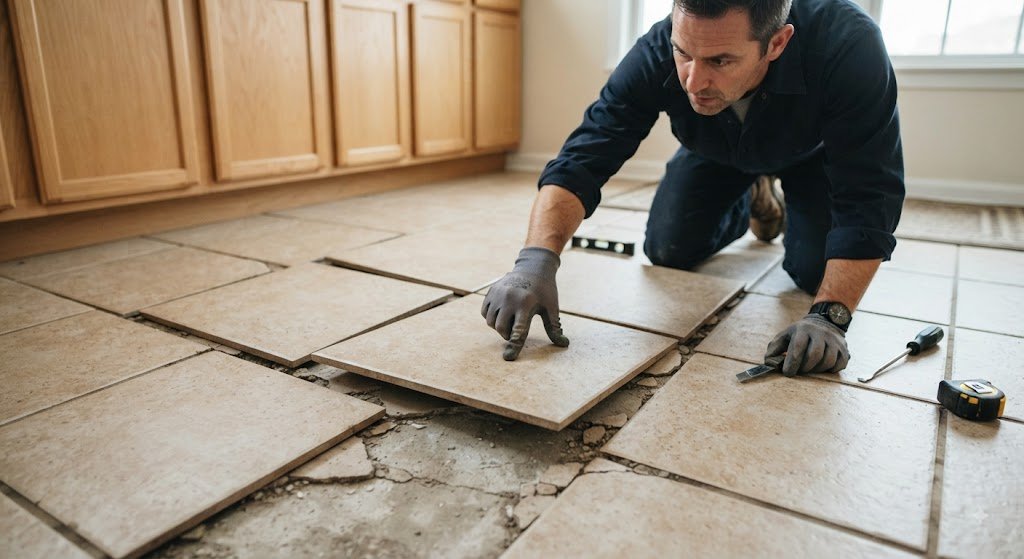
A floor tile that moves slightly when you step on it can be easy to ignore, especially if the rest of the floor looks normal. You may notice a faint clicking sound, a small amount of movement under your foot, or grout that keeps cracking around one particular tile.
A loose tile is not always an emergency, but it is worth investigating. Movement can damage surrounding grout, allow moisture or dirt into gaps, and eventually cause the tile itself to crack. In some cases, the loose tile is simply a local installation problem. In others, it can point to moisture, movement in the subfloor, or a wider flooring issue.
The good news is that you can perform several basic checks yourself before deciding whether the tile needs repair or professional attention. This guide explains the common causes, what to inspect, how a simple repair generally works, and when it is better not to tackle the problem alone.
What Does a Loose Floor Tile Mean?
A floor tile is normally held firmly against the surface beneath it by an adhesive, mortar, or another suitable bonding material. When that bond weakens or the surface underneath moves, the tile may no longer stay completely stable.
A loose tile may not look damaged. It can still appear perfectly level and match the surrounding tiles. The first sign may simply be movement when pressure is applied.
Some loose tiles produce a hollow or slightly different sound when tapped gently compared with neighboring tiles. This can sometimes indicate that there is less bonding material beneath part of the tile, although sound alone cannot confirm the exact cause.
The location of the tile also matters. A loose tile beside a shower, sink, toilet, exterior doorway, or other moisture-prone area deserves closer attention because water may be contributing to the problem.
Common Reasons Floor Tiles Become Loose
Poor bonding during installation
One possible cause is an incomplete or weak bond between the tile and the surface underneath.
If the adhesive or mortar did not properly cover the required area, parts of the tile may have little support. Repeated foot traffic can eventually cause movement.
This can happen because of installation technique, unsuitable materials, or because the surface was not prepared correctly before the tile was installed.
Movement underneath the tiles
Tiles are relatively rigid, so movement beneath them can put stress on the tile and its bond.
A subfloor can move slightly because of structural movement, moisture-related changes, inadequate support, or other construction issues. If the surface continues moving, a replacement tile may eventually become loose too.
This is particularly worth considering if several tiles in the same area are showing similar problems.
Moisture beneath the flooring
Water can contribute to flooring problems in areas exposed to leaks or repeated moisture.
A damaged pipe, appliance leak, plumbing fixture, or water entering from another area can affect the materials below the tile. Depending on the flooring system, moisture can weaken the bond or damage the substrate.
Do not assume that a loose tile near water is caused by moisture, but treat the location as a reason to investigate carefully.
Expansion and contraction
Building materials can expand and contract as conditions change. If a tiled floor does not have suitable provisions for movement, stress can develop in the installation.
The effect may show up as cracked grout, tenting, gaps, or loose tiles.
If several tiles are lifting or moving, replacing one tile without investigating the surrounding floor may not provide a lasting solution.
Heavy impact
A strong impact can loosen a tile even when the original installation was sound.
Dropping a heavy object can damage the tile or weaken its bond. You may notice the problem immediately, or the tile may gradually become more noticeable as foot traffic works on the weakened area.
Look for chips, cracks, or impact marks when a loose tile appeared after an accident.
Age and normal wear
Older tiled floors can develop problems over time. Materials may deteriorate, previous repairs may fail, or the surface beneath the tile may change.
Age alone does not mean that tiles should become loose, but it can make an existing installation problem more noticeable.
What You Should Check First
Before trying to remove a loose tile, inspect the surrounding area.
Start by making sure the floor is clean and dry. Then place your hand or foot gently on the tile and compare its movement with nearby tiles.
Ask yourself a few simple questions:
- Does the tile move noticeably?
- Does it make a clicking or shifting sound?
- Is the grout around it cracked or missing?
- Is the tile itself cracked?
- Are nearby tiles also moving?
- Is the problem close to a possible source of water?
- Does the floor feel uneven around the tile?
A single loose tile surrounded by firm tiles may be a localized repair. Several loose tiles in one area suggest that you should look for an underlying cause before making a cosmetic repair.
Check the Grout Around the Tile
Cracked grout can be both a result of tile movement and a useful clue that movement is occurring.
Look carefully at the joints around the loose tile. If the grout is cracked along several sides, the tile may have been moving for some time.
Do not assume that replacing the grout will solve the problem. Grout can make a floor look finished, but it is not a substitute for a stable bond beneath the tile.
If the tile is moving, repair the underlying tile installation rather than simply filling the surrounding cracks.
[Internal link opportunity: article about fixing cracked grout between floor tiles]
Look for Signs of Water Problems
If the loose tile is near a bathroom, kitchen, laundry area, or plumbing fixture, inspect the surrounding area for signs of moisture.
Look for staining, persistent dampness, unusual odors, swollen materials nearby, or damage around fixtures. Check obvious accessible plumbing connections for visible leaks without dismantling plumbing components.
If water appears to be coming from a concealed pipe, damaged waterproofing system, or another source that you cannot safely access, professional help may be necessary.
Fixing the tile before fixing the water problem can result in the same flooring damage returning.
Check Whether Nearby Tiles Are Also Loose
A single loose tile is different from a group of loose tiles.
Press gently on the tiles surrounding the problem area. You do not need to force them or use heavy tools. You are simply trying to determine whether the problem is isolated.
If several tiles move, lift, sound hollow, or show cracked grout, stop and investigate further.
A larger affected area can indicate movement beneath the flooring, moisture, installation problems, or another issue that may require more extensive work.
Can You Fix One Loose Floor Tile Yourself?
A single loose tile can sometimes be repaired as a DIY project if the tile is intact and the underlying surface is stable.
The repair generally involves removing the tile carefully, cleaning away old adhesive or mortar, checking the surface underneath, applying an appropriate bonding material, resetting the tile at the correct level, and allowing it to cure before replacing the grout.
The exact materials and procedure depend on the tile type and installation system.
Before starting, make sure you can obtain a replacement tile if the existing one breaks during removal. If you do not have a matching tile and the current one is already damaged, removing it without a replacement available can leave you with a larger unfinished area.
How to Approach a Simple Loose-Tile Repair
1. Protect the surrounding area
Clear furniture and objects from the work area. Wear appropriate eye protection when removing tile or hardened adhesive because small pieces can break away unexpectedly.
If power tools will be used, follow their safety instructions and keep the work area controlled.
2. Remove the grout around the tile
The grout surrounding the tile should generally be removed before attempting to lift the tile.
Work carefully around the joints so you do not damage neighboring tiles. A manual grout removal tool can give beginners better control for a small repair.
This step creates separation between the loose tile and surrounding tiles.
3. Lift the tile carefully
If the tile is already loose, it may come away with limited effort. Do not force it aggressively.
A tile that refuses to release may still have areas of strong bonding underneath. Excessive force can damage the surrounding tiles or the substrate.
If the tile is broken and must be removed in pieces, take additional care because sharp ceramic or porcelain fragments can cause cuts.
4. Inspect and prepare the surface underneath
Once the tile is removed, inspect the exposed surface.
Look for moisture, crumbling material, damaged substrate, large gaps, or other signs that the problem extends beyond the tile.
Remove loose old adhesive or mortar as appropriate for the installation system, while avoiding unnecessary damage to the underlying surface.
The replacement material should be applied to a clean, suitably prepared surface.
5. Reset the tile with the appropriate material
Use a bonding product designed for your tile and installation surface. Follow its instructions for preparation, coverage, application, and curing.
The tile should sit at the correct height relative to the surrounding floor. Avoid creating a raised tile that becomes a trip hazard.
Do not rush this stage. The bond underneath is what keeps the tile stable.
6. Allow the repair to cure
Keep the area free from unnecessary traffic while the bonding material cures.
The manufacturer’s instructions should determine when the floor can safely be walked on and when grout can be applied.
7. Replace the grout
After the tile has been properly secured and the bonding material has cured as required, replace the grout around the tile.
Choose grout appropriate for the tile and joint. Follow the product instructions for mixing, application, cleaning, and curing.
If the surrounding grout was damaged because of the loose tile, inspect nearby joints rather than repairing only the most visible crack.
Mistakes That Can Make a Loose Tile Problem Worse
One common mistake is simply adding grout around a moving tile. This may hide the gap temporarily, but it does not restore the bond underneath.
Another mistake is using an unsuitable adhesive because it is readily available. Tile installations vary, so a product that works for one surface may not be appropriate for another.
Do not skip surface preparation. Dust, loose material, old adhesive, or moisture can interfere with the new bond.
Avoid forcing a tile back into place without understanding why it became loose. If movement or moisture caused the original problem, the same issue can loosen the replacement.
It is also risky to assume that a hollow sound automatically means a tile must be replaced. Sound can provide a clue, but it should be considered alongside movement, visible damage, and the condition of surrounding tiles.
When You Should Call a Professional
A professional should be considered when the problem appears larger than one loose tile or when the cause is unclear.
Get professional help if you notice significant floor movement, widespread loose tiles, major cracks, signs of structural movement, or suspected concealed water damage.
You should also avoid taking apart areas involving major plumbing, structural components, or other systems you are not qualified to work on.
If tiles are lifting across a large section of the room, do not keep replacing individual tiles without investigating the reason. A qualified flooring professional or appropriate building professional can assess the installation and determine whether the problem is limited to the tile or involves the underlying floor.
For renters, report recurring or extensive flooring problems to the landlord or property manager before making permanent repairs.
How to Prevent Loose Tiles
Prevention starts with addressing small problems early.
Repair damaged grout when appropriate, but first investigate why the grout failed. Keep an eye on areas near plumbing fixtures and appliances for leaks or persistent moisture.
Avoid dragging very heavy furniture across tiled floors. Use suitable furniture pads where appropriate, and take care when moving heavy objects.
When tiles are installed or replaced, proper surface preparation and suitable installation materials matter greatly. The bonding material should match the tile and substrate, and the installation should allow for movement where required.
Regularly inspect floors in high-traffic areas. A tile that has just started moving is easier to investigate than one that has already cracked or damaged neighboring tiles.
Frequently Asked Questions
Can I fix a loose floor tile without removing it?
Sometimes a tile may appear stable after being pressed back into position, but simply securing it from above is not a reliable solution for every installation. If the bond underneath has failed, the proper repair usually requires access to the surface beneath the tile.
Why does one floor tile sound hollow?
A hollow sound can occur when there is less bonding material beneath part of the tile. It can be a clue to an installation issue, but sound alone does not prove that the tile is loose or defective.
Should I replace cracked grout around a loose tile?
Replacing the grout may improve the appearance, but it does not address movement underneath the tile. The tile should be stabilized first if it is actually moving.
Can water cause floor tiles to become loose?
Water can contribute to flooring problems in some situations, particularly when there is an ongoing leak or moisture reaching materials beneath the tile. The exact cause depends on the construction of the floor.
Is one loose tile a serious problem?
One loose tile is not necessarily a major problem, but it should not be ignored. Early inspection can help prevent damage to the tile, grout, or surrounding flooring.
Why does the same tile keep becoming loose?
Repeated failure usually means something has not been corrected. Possible causes include movement beneath the tile, moisture, poor bonding, or an unsuitable installation. Repeated repairs are a reason to investigate the underlying floor.
Final Thoughts
A loose floor tile is often a symptom rather than the whole problem. Before replacing it, check whether the tile itself is damaged, whether the grout is failing, whether nearby tiles are moving, and whether moisture could be involved.
If one tile is loose and the surface underneath appears sound, a careful replacement may be a reasonable DIY project. But when several tiles are affected, the floor is moving, or water damage is suspected, repairing individual tiles may only postpone the real fix.
Taking a few minutes to inspect the area before reaching for tools can help you choose the right repair and avoid repeating the same job later.