
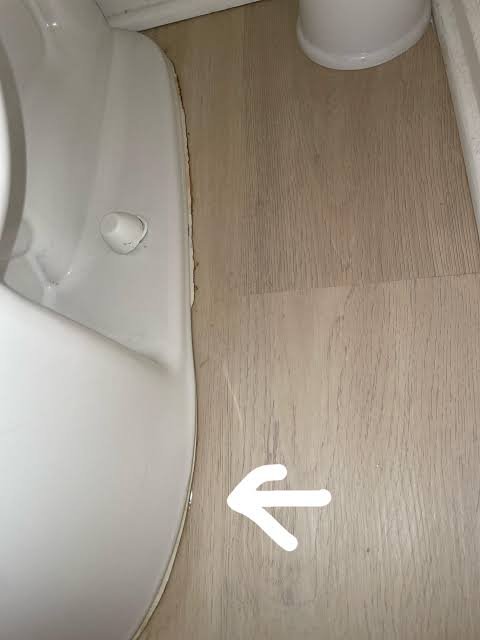
Finding water around the base of a toilet is something worth investigating, even if there is only a small damp patch. The water may come from a simple condensation problem, a loose connection, a leaking supply line, or a damaged seal where the toilet meets the drainage pipe.
The location and timing of the water can provide useful clues. Water that appears after flushing points toward different possibilities from moisture that is present even when the toilet has not been used.
The first step is to dry the area completely and then observe when new moisture appears. Avoid assuming that the toilet base itself is always the source because water can travel from the tank, supply connection, or nearby plumbing before collecting around the floor.
What Water Around a Toilet Could Mean
Water around a toilet can come from several places.
The toilet tank may be leaking. The supply hose may have a loose or damaged connection. Condensation may be forming on a cold tank or pipe. Water may also be escaping from the toilet’s drainage connection or seal.
The difference matters because the appropriate repair depends on where the water starts.
A small amount of moisture does not automatically mean the toilet needs to be replaced. In many cases, the source can be identified through a simple inspection.
However, water that repeatedly appears around the toilet base should not be ignored. Continued moisture can damage flooring and surrounding materials, particularly when the leak is hidden underneath the toilet.
Start by Drying the Area Completely
Before investigating, wipe the floor around the toilet until it is completely dry.
Dry the visible outside surfaces of the toilet as well, including the bottom of the tank and the area around the water supply connection.
If there is a bath mat or other fabric nearby, remove it temporarily. It can hold water and make it difficult to tell whether fresh moisture is appearing.
Once everything is dry, wait and observe.
If the floor remains dry while the toilet is not being used, the leak may only occur during flushing or refilling.
If water returns without the toilet being used, a continuous supply-side leak or another source may be more likely.
Check the Toilet Supply Connection
Look at the flexible water supply hose connecting the toilet to the shut-off valve.
Check both ends carefully.
Look for:
- Droplets forming around a connection
- Dampness along the hose
- Cracks or obvious damage
- Corrosion around the fittings
- Water appearing around the shut-off valve
Run the toilet through a normal refill cycle while watching the connection.
If water appears as the tank refills, the supply line or one of its connections may be responsible.
Do not repeatedly tighten a connection just because it is damp. The washer or fitting may be damaged, and excessive tightening can make the problem worse.
If the hose is cracked or badly corroded, replacement is generally preferable to trying to repair the hose itself.
[Internal link opportunity: article about finding the source of a small water leak under a sink]
Check the Toilet Tank
The tank is another possible source of water.
Look around the tank’s bottom, sides, and connection points. Check for cracks or droplets.
A tank can also leak around its connection to the bowl, depending on the toilet design.
Run your hand or a dry cloth around accessible areas to identify fresh moisture.
If the tank is cracked, do not attempt to repair it with a temporary patch and continue using the toilet indefinitely. Ceramic can fail unexpectedly, and replacing a damaged component is usually safer.
If the tank is leaking from a connection or seal, the appropriate repair depends on the toilet’s design.
Check Whether Condensation Is the Cause
Not every wet toilet is leaking.
When cold water enters the toilet tank, the outside surface can become cold. In humid conditions, moisture from the surrounding air can condense on the tank and run down toward the floor.
This is more likely when:
- The bathroom is warm and humid.
- The toilet tank feels noticeably cold.
- Moisture appears on the outside of the tank.
- The dampness is spread across the tank rather than concentrated around one fitting.
- The water appears after the toilet has been refilled.
Condensation usually looks different from a plumbing leak. Instead of one connection producing a distinct drip, the outside of the tank may become generally wet.
Improving bathroom ventilation can sometimes reduce condensation.
If the amount of water is substantial or appears even when the tank surface is dry, investigate for a plumbing leak instead.
See Whether the Water Appears After Flushing
Once the area is dry, flush the toilet and watch the base.
Do not touch or loosen any plumbing while the toilet is flushing.
Look for the first place where fresh water appears.
If water comes from around the base shortly after every flush, the toilet’s drainage connection or base seal may be involved.
If water appears farther back near the tank or supply connection, the source may be above the floor.
The timing is useful because a toilet base leak that happens specifically during flushing deserves different attention from water that appears continuously.
What a Leak at the Toilet Base Could Mean
If the floor becomes wet around the base after flushing, one possible cause is a failed seal between the toilet and the drain connection.
The toilet is connected to the drainage system through a sealing arrangement designed to prevent wastewater from escaping.
If that seal deteriorates, moves, or is otherwise compromised, water can escape during flushing.
A toilet that rocks slightly can also be a concern because movement may affect the seal.
Do not assume that simply applying sealant around the outside of the toilet will solve the problem. A visible bead of sealant may hide the source without repairing the underlying connection.
A base leak is one situation where professional assessment is often worthwhile, particularly if the toilet needs to be removed and reseated.
Check Whether the Toilet Rocks
With the toilet not being used, gently observe whether it moves at the base.
Do not deliberately rock it forcefully.
A toilet that shifts noticeably can indicate an installation or flooring problem. Movement can place stress on the connection between the toilet and the drainage system.
If you notice significant movement along with water appearing around the base, arrange for a qualified plumber to inspect it.
Do not try to stabilize a moving toilet by randomly tightening visible bolts as far as possible. Excessive force can damage the ceramic base.
Check Nearby Plumbing and Fixtures
Sometimes the toilet is blamed simply because it is where the water is easiest to notice.
Look around nearby fixtures.
Water from a shower, bathtub, basin, cleaning activity, or leaking pipe can travel across the bathroom floor and collect around the toilet.
If the toilet itself appears completely dry, consider whether another fixture is producing the water.
Dry the surrounding floor and repeat the test after using nearby plumbing.
This is particularly useful in smaller bathrooms where water can travel a surprising distance before becoming visible.
What If the Toilet Leaks Only When It Is Flushed?
A leak that occurs only during flushing is a useful clue.
If water appears at the base, a drainage connection or seal may be involved.
If water appears around the tank, bowl, or supply connection, the source may be elsewhere.
Watch the toilet during the entire flush cycle rather than checking only after it has finished.
The leak may occur for just a few seconds while water is moving through the system.
If you cannot identify the exact source, avoid removing the toilet simply to investigate. A professional can determine whether the toilet needs to be reseated or whether another component is responsible.
What If Water Appears Even When Nobody Uses the Toilet?
Water that returns while the toilet is sitting unused may indicate a supply-side leak.
Check the supply hose, shut-off valve, tank connections, and other nearby plumbing.
A continuously leaking supply connection can release water even when the toilet has not been flushed.
If the water supply valve is faulty and cannot safely shut off the toilet, a plumber may be needed.
If water appears from beneath the toilet itself while the fixture has not been used, the situation deserves further investigation rather than being dismissed as normal moisture.
Common Mistakes to Avoid
One mistake is assuming that every puddle around a toilet is caused by the toilet base.
Water can travel from the tank, supply line, nearby plumbing, or bathroom fixtures.
Another mistake is using sealant around the toilet base as a first response. Sealant may conceal a leak without fixing the damaged seal underneath.
Do not overtighten toilet mounting bolts. Ceramic can crack when excessive force is applied.
Avoid removing the toilet unless you are prepared to deal with the drainage connection correctly. Toilet removal can expose you to unpleasant wastewater and may require a new sealing component during reinstallation.
Do not ignore recurring moisture simply because it disappears after wiping. A hidden leak can continue even when there is no large puddle.
When You Should Call a Professional
Some sources of toilet water are straightforward to identify, but others require plumbing experience.
Contact a qualified plumber if:
- Water repeatedly appears around the toilet base.
- The toilet moves or rocks noticeably.
- You suspect the base seal is leaking.
- The toilet or tank is cracked.
- A supply valve is damaged or will not shut off.
- A supply hose is badly corroded or leaking.
- Water is coming from beneath the flooring.
- You cannot identify the source after basic checks.
- The leak is large or rapidly getting worse.
- Wastewater may be escaping from the toilet connection.
If water is flowing rapidly, shut off the toilet’s water supply if you can do so safely.
For renters, report persistent toilet leaks to the landlord or property manager when plumbing maintenance is their responsibility.
How to Prevent Water From Collecting Around the Toilet
Regular inspection can help catch small problems before they become larger ones.
Every so often, look around the toilet base, supply connection, and tank for moisture or staining.
Keep the area around the toilet reasonably clear so leaks are easier to notice.
Pay attention to changes after flushing. A small amount of water that appears repeatedly is worth investigating.
Do not use the toilet as a place to store heavy items or put pressure on the tank.
If you notice that the toilet has started rocking, arrange for it to be checked rather than continuing to use it without addressing the movement.
Good bathroom ventilation can also reduce condensation when humidity is high.
[Internal link opportunity: article about finding early signs of water damage before they become expensive repairs]
Frequently Asked Questions
Why is there water around my toilet but the tank is dry?
The water may be coming from the supply connection, toilet base, drainage connection, or another nearby fixture. Dry the area and watch for the first place where fresh water appears after flushing.
How can I tell if my toilet base is leaking?
Dry the floor completely and flush the toilet while observing the base. If fresh water repeatedly appears around the base during or shortly after flushing, the drainage connection or base seal may need inspection.
Can condensation make the floor around a toilet wet?
Yes. A cold toilet tank can collect moisture from humid bathroom air. The water can run down the outside of the tank and eventually reach the floor.
Should I caulk around a leaking toilet base?
Caulk should not be used as a way to hide an unexplained leak. If water is escaping from the toilet’s base, the underlying seal or drainage connection may need to be inspected and repaired.
Is a small amount of water around a toilet serious?
It depends on the source. Condensation may be relatively minor, while wastewater or a supply leak can cause ongoing damage. Any recurring unexplained moisture should be investigated.
Can a loose toilet cause water to leak?
A toilet that moves can place stress on its connection and may be associated with a damaged or compromised seal. If the toilet rocks noticeably, professional inspection is advisable.
Final Thoughts
Water around a toilet can have several causes, and the puddle itself does not always reveal where the leak began. Start by drying everything, then check the supply connection, tank, toilet base, and nearby fixtures while observing what happens during and after a flush.
Condensation can explain some moisture, especially in warm and humid bathrooms. A recurring leak at the base, however, deserves more attention because it may involve the toilet’s connection to the drainage system.
Avoid covering unexplained leaks with sealant or forcing toilet fittings tighter. If the toilet rocks, the base repeatedly becomes wet, wastewater may be escaping, or you cannot identify the source safely, have a qualified plumber inspect the installation.